Showing posts with label world war II. Show all posts

Saturday, August 31, 2024

trump's Violations of Norms and the Beltway's Inability to Cope

Ben Kesling at the Columbia Journalism Review has it right: 

On Tuesday, NPR’s Quil Lawrence and Tom Bowman broke the news that Trump and members of his campaign appeared to violate federal law during an appearance at Arlington to mark the third anniversary of the deadly attack on US troops that punctuated the deeply flawed withdrawal from Afghanistan. Members of Trump’s staff had sought to film the event for a campaign video, and got into an altercation with an Arlington National Cemetery staff member who tried to stop them. Steven Cheung, a Trump campaign official, strongly denied that any altercation had taken place and said the campaign was ready to release a video to prove his point. (They have yet to release it.) It wasn’t surprising that these two NPR pros with deep knowledge of the military, and sources among veterans, were the first with the news. The Washington Post followed with a story the same day, as did the New York Times. The public took note.

As more publications followed suit, the Arlington stories suffered a dreadful fate: they all started to sound the same. News outlets ended up with articles bogged down in parsing federal law, carefully defining what exactly counts as an altercation, and quoting milquetoast official statements like “There was an incident and a report was filed.” 

Lumped together, the reporting this week left readers and listeners, especially those with no knowledge of the military, at a loss to understand what actually happened—and, crucially, why it mattered so much. The Trump campaign team had successfully muddied the waters by alleging that the photographer had been invited to the event by family members of soldiers buried there. 

But as any veteran knows in their bones, the solemnity of the ceremony is exactly why the unauthorized photographer had no business being there—regardless of who invited them...

This is a very big reason why the veterans' organizations and a lot of veterans on social media are livid towards trump right now. And yet, the Beltway media doesn't seem to understand the fury:

Readers needed to know that, when you visit Arlington, you might not know exactly what you’re supposed to do when confronted by those rows of headstones, but you damn sure know what you’re not supposed to do. But the coverage this week left many readers with the impression that the whole thing might have been a bureaucratic mix-up, or some tedious violation of protocol. It focused on bland horse-race coverage so common during election season, rather than clearly stating what really took place: an egregious and willful violation of long-standing norms...

This has been one of the most obvious problems that our mainstream media suffers when it comes to covering trump, especially those moments when trump violates not only the established norms of political comity but also the long-established norms of common courtesy.

Put aside the well-told tales by now of trump's personal inability to understand military service, and his blunt disdain for those who suffered and died in that service. trump simply has no respect or diligence for anything he can't use or abuse.

Look at how trump himself behaved during this staged fiasco. Not only ignoring the cemetery's requirements to not bring his own campaign staff - he did - and not to bring his own photographer - he did, and promptly blamed it on the families he talked into hosting his appearance - and not to turn the memorial service into a partisan event - it became clear he was going to claim the moment was an official ceremony and accuse Biden and Harris of failing to show, in order to paint THEM as disrespectful to the military - trump proceeded to preen and pose at the gravesite of the fallen soldier with a grin and a thumbs up.

I refuse to show that photo on my blog. It is offensive and obscene. It's not that he's desecrating the burial grounds by urinating on the grave marker, it's that he's violating the common custom of treating cemeteries as a solemn and sacred location.

This is on him. This is how trump behaves for ANY photo op: standing with someone or a group who must act "grateful" to be in his presence, flashing that smile like he's happy instead of the dour bad boss he often is, and giving a thumbs up like "I'm perfect, I'm winning!"

And that's trump having no sense of place, no sense of humility, no sense of the gravity or gravitas of the situation, no sense at all really.

You damn sure know what you’re not supposed to do. And trump clearly doesn't know that.

The pity is the goddamned Beltway media doesn't know what to do with trump.

The media is unable to call trump out for his inhumane, clueless, selfish behaviors. They just can't, terrified of seeming biased and getting attacked by the Far Right for speaking the obvious that the GOP standard bearer - hell, the entire Republican Party leadership - is incapable of being a goddamned normal human being. 

This isn't just on the media owners, who are clearly in the tank for a Republican Party that's going to cut taxes for the uber-rich if they regain full control of government this 2024. This is on the editors and the writers and the reporters in the field just genuinely incapable of making the moral decision to point out how immoral trump truly is.

Gods help us.

I should mention how this is a personal matter for me. In the time that this scandal's percolated to this level of trump struggling to blame everyone else for his screwup, I've remembered that my father took me to Arlington a long time ago - probably on that week my older brother got married in Maryland when I was in my 20s - to visit the gravesites of his father and mother. I never met Grandpa Wartenberg - he died in 1968 before I was born - and dad rarely talked about him. Best I recall, my grandfather served as an officer on a Navy submarine during World War II in the Pacific (Grandma died when I was 8, and was buried in another spot in that region because of how the cemetery works). If the Naval records I've read is correct, Grandpa joined the Navy in 1917 and it looked like he served until 1946. If he was on the front lines of the Pacific War, he earned that spot in Arlington. (I need to find more about his duty during the big war).

When we visited, Arlington was a peaceful, calm, quiet place. There were others nearby visiting the graves of their family members, and everyone was solemn. Dad and I paid our respects at the markers, it might have been when dad talked about grandpa's service, but that was it. Nothing fancy. Nothing outlandish. That's all you're expected to do when you're honoring the dead.

trump just can't do that, can he.

/rage

Saturday, June 08, 2024

Old Hero Greeting The Next Hero at Normandy Anniversary

I wrote last year a comparison between the importance of D-Day as a key turning point in World War II and the importance of Ukraine standing up against Russian invasion: 

Those landings were 79 years ago, but they remain fresh in our memories. The realization of the horrors of war, the sacrifices made, the honors gained and lives lost. 

They remain fresh because those struggles are repeating in Europe today, as Ukraine is now the battlefront against a Russian horde seeking to rebuild an empire under Putin at the expense of European stability...

This won't be an easy fight for Ukraine. Wars never are.

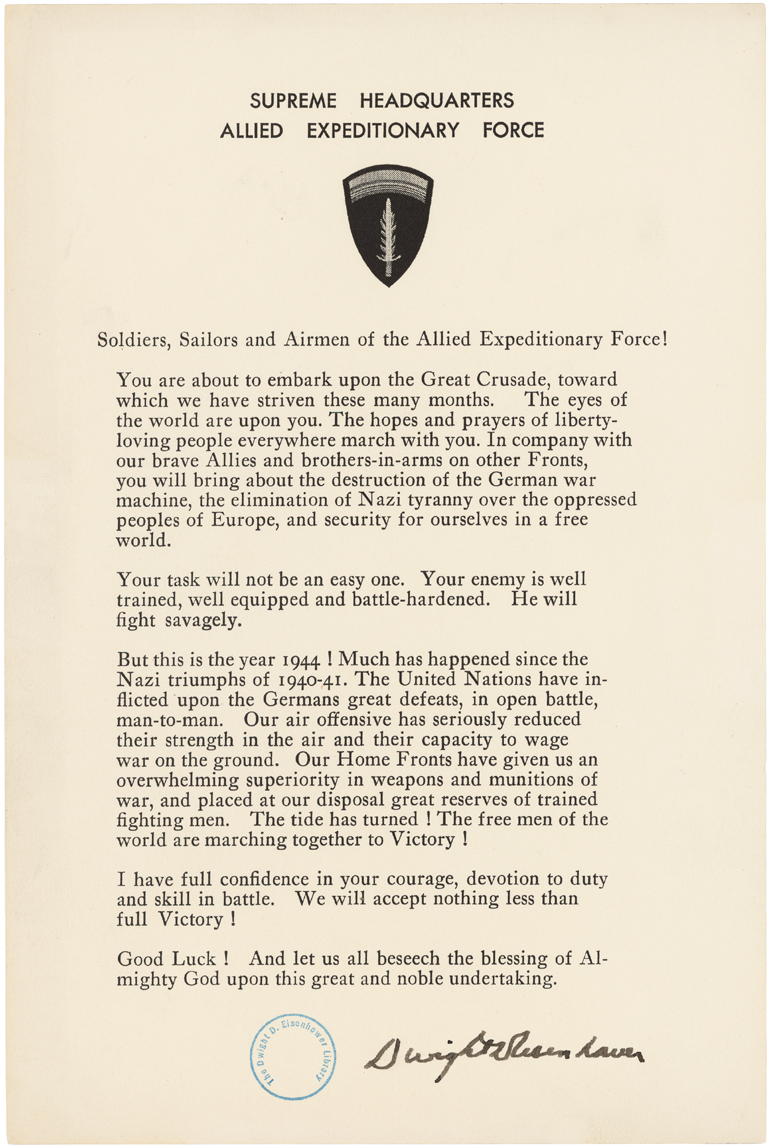
But Eisenhower said it best in 1944 when he extorted Allied troops to victory:

Soldiers, Sailors, and Airmen of the Allied Expeditionary Force!

You are about to embark upon the Great Crusade, toward which we have striven these many months. The eyes of the world are upon you. The hope and prayers of liberty-loving people everywhere march with you. In company with our brave Allies and brothers-in-arms on other Fronts, you will bring about the destruction of the German war machine, the elimination of Nazi tyranny over the oppressed peoples of Europe, and security for ourselves in a free world...

Just switch out Germans for Russians, and the gist is the same.

I'm not the only one who thinks that. One of the few surviving veterans of World War II that appeared this week in Normandy France to honor the 80th anniversary of D-Day had a moment meeting Ukrainian President Zelensky (via Guardian News YouTube):


The veteran kissed Zelensky's hand - or tried to, Zelensky was too humble to take it - and told him "You're the savior of the people." 

"You saved Europe," Zelenksy replied.

Game recognizes game. Hero recognizes hero.

That veteran understands that Ukraine is fighting to save Europe now. The rest of Europe needs to do more to aid Ukraine against Russia and help them stop Putin's warmongering fantasies.


Thursday, June 06, 2024

D-Day Anniversary: The Few Remaining

The Normandy landings happened 80 years ago this day, and so this D-Day remembrance in France has been honoring the few aging veterans who are still alive: 


We are always moving forward in time, to where the persons who lived through these historic events are passing away. In a few more years, there will be no one left alive who can tell us what it was like storming the beaches and parachuting out of the night sky to fight these battles to end the fascist rule of Nazis who had taken over much of Europe and threatened the rest of the world.


Friday, July 21, 2023

The Age of Barbieheimer

Okay, with all the chaos going on in the political world, are we the United States ready as a nation to handle a cultural moment like having two movies not compete but complement and co-exist with each other?

Because we're at that moment July 21 2023 where the Hollywood tradition of "counterprogramming" - where a movie release of obvious blockbuster proportions makes it difficult to release other films, except  giving a smaller sometimes more artistic movie a chance to attract audiences that are not attuned to that blockbuster - offered us the movie Barbie - a comedic, lighthearted, brightly colored goofball type of movie based on "Intellectual Property" (IP) bringing in an established and fervent fanbase designed solely to entertain and make $500 million at the box office - versus Oppenheimer - a dramatic, darkly lit serious biographical epic focusing on the man most responsible for the atomic bomb and the world-shattering implications of such a weapon, and designed to be Oscar Awards bait - to be the highlights of a movie summer season.

Except something weird happened. The movie-going fanbases got into the "counterprogramming" effort - we are now as a species in a kind of post-modern awareness of tropes - and started complementing each other's films to where a contingent of filmgoers openly planned to watch both films as a double-header.

The event got its own Wikipedia page: Barbieheimer. The meme of the year.

Via Rebecca Rubin at Variety:

At a glance, the audience overlap isn’t clear. “Oppenheimer,” starring Cillian Murphy, Robert Downey Jr. and Emily Blunt, is a somber character study about the theoretical physicist who led the development of the atomic bomb. “Barbie,” featuring Margot Robbie and Ryan Gosling, is a neon-hued fantasy comedy about Barbie-Land expats who go on a quest for self-discovery in the real world. Visually, “Oppenheimer” is moody and intense, while “Barbie” is a physical manifestation of the color pink. Yet the contrast is the very thing that’s galvanizing film lovers.

“This could have been something dividing the masses, but instead it’s bringing everyone together,” says Nicole Boisseau, a 21-year-old Richmond, Va. student. Her dad, Jay Boisseau, who also has tickets to both films at Alamo Drafthouse on opening weekend, says that jokes aside, the mismatched scheduling works out for viewers. “Since they are so different, it’s not like you’re going to spend six hours watching the same thing,” he notes.

And as Rubin points out, as the fandoms got more into the idea of the double-feature, the situation got weirder as people noticed that the two films are going to be stunningly similar in archetypal ways:

But his daughter believes the movies have more in common than meets the eye. “They’re both questioning the nature of humanity.” (She’s serious. During one hilarious scene in the “Barbie” trailer, Margot Robbie’s life-size doll turns to her friends at a dance party to ask: “Do you guys ever think about dying?”)

That wham line from the trailer did indeed spark a new wave of discussions among the Barbie faithful, as more clues from other trailers and teasers pointed to that film sending their character on a Hero's Journey to find out what is wrong with herself (more specifically, what is wrong with the young girl that Barbie represents). The "something weird" got weirder... and more profound.

The audiences began realizing that instead of a cheap, fun, almost perfunctory piece of entertainment - like the animated Super Mario Bros movie released earlier this year that performed to box office expectations - they were getting a Barbie movie from a film auteur willing to explore the deeper ramifications of the doll's cultural impact since its introduction in 1959, alongside a bioepic film about the inventor of nuclear Armageddon from an equally imposing film auteur who knows how to stir emotional awe and enlightenment out of the darkness itself:

Some cinephiles believe it’s because the two filmmakers inspire a particular kind of loyalty in their fans. Nolan, who has delivered commercial winners like “The Dark Knight,” “Inception” and “Interstellar,” and Gerwig, the indie favorite behind “Lady Bird” and “Little Women,” are the rare directors who can draw audiences on their name alone.

“It comes down to the filmmakers, who are widely respected. They complement each other in a weird way,” says Meredith Loftus, 30, of Los Angeles. She compared the scheduling to an unusual double-header in 2008 of Nolan’s superhero epic “The Dark Knight” and the kitschy musical “Mamma Mia!,” which opened on the same day...

I'd discussed Nolan's Dark Knight before, when honoring Tiny Lister's passing, and how Nolan took an IP themed "product" - Batman - and crafted a noir-ish operatic epic that not only won the box office but wowed the film critics. I'd written elsewhere how The Dark Knight deserved Oscar love and yet got snubbed in such a way that the outrage reshaped the awards to accept more films for Best Picture (and opened the door for action thriller-type movies like Mad Max Fury Road to achieve the honor of getting nominated).

We're now facing a similar moment with Greta Gerwig taking an IP themed Barbie and turning it into an Oscar contender. Seriously, more than just the (deserved) Set Design and Costuming nods the film's likely to get (just the fact alone that the production used up every pink paint and dye on the planet should get the awards).

We're talking about a movie where the early reports about the plot - confronting the themes of Stepford Wives-ish suburban conformity, the gender roles that Barbie (and Ken) impart to the girls and boys who play with them (and reflect back onto themselves), the struggle between matriarchy and patriarchy as the fantasy of Barbies who can do everything - doctor, lawyer, President, mermaid - crash into the harsh real world where men are mostly in control and Barbies are treated as sex objects, even the fact that Barbie is an "Intellectual Property" of Mattel that the company (represented by Will Ferrell's CEO) insists on "keeping in a box" ("biting the hand" humor indeed) - that clearly makes the film more philosophical and wistful than a simple Product Placement movie is expected to be.

Anchoring all that are performances that fans are already expecting to be excellent. Margot Robbie arguably was born to play Barbie her whole life - naturally blond, dancer's legs, the slim body that the Barbie doll is (in)famous for - but with an expressive face that can convey incredible gravitas (and she's been Oscar nominated before, so unless Meryl Streep and Helen Mirren and Natalie Portman and Jennifer Lawrence and Angela Bassett all come out with jaw-dropping lead actress roles this autumn, Robbie should get her due). Ryan Gosling - he of the Photoshopped washboard abs - is also getting critical acclaim for his role as Ken, the "boyfriend" that culturally has been reduced to just another accessory for Barbie but whose exposure to the real-world "Alpha Male" movement threatens the stability of the fantasy Barbieland back home (Gosling has also received Oscar nominations before, so as long as Leo DeCaprio and Jamie Foxx and Timothee Chalamet and Andrew Garfield and Denzel Washington and Tom Hanks don't come out with serious lead actor roles this autumn, Gosling should get his due).

In the face of all that, the expectations for Oppenheimer are lower in terms of box office but higher in terms of critical acclaim: There is already Oscar talk for actor Cillian Murphy, and Nolan is bound to get another shot at Best Director. Given the A-list talent - Matt Damon, Robert Downey Jr, Emily Blunt, Kenneth Branagh, Florence Pugh, Rami Malek - on-board other acting nominations are likely, and a lot of technical award nominations as well.

There's not much spoilers to what the audiences will know about the plot: We all know what happened July 16th 1945 when the Trinity Bomb test took place and the Atomic Age was no longer a product of Science Fiction. We all know there were serious debates among the physicists, military leaders, and politicians about the ramifications of weaponizing the atom. And we all endured the decades of Duck And Cover, the Cuban Missile Crisis, the Doomsday Clock, Mutually Assured Destruction, "Shall We Play A Game?", and the post-Cold War nightmare of rogue nations carrying suitcase bombs.

Like all the other epic biographical films of before - Lawrence of Arabia, Gandhi, Weird: The Weird Al Story - Oppenheimer tries to delve into the background and motivations of a real-world figure whose personal life is still not well-known or understood. The general awareness is of a scientist who pushed during the Second World War for the creation of nuclear weapons before Nazi Germany could unleash them first, only to realize the dangers he himself brought to the world and later tried to atone for the damage he'd caused.

The best we remember Oppenheimer is his famous quote about what he thought when he saw the first nuclear mushroom cloud: 

We knew the world would not be the same. A few people laughed, a few people cried. Most people were silent. I remembered the line from the Hindu scripture, the Bhagavad-Gita; Vishnu is trying to persuade the Prince that he should do his duty, and to impress him, takes on his multi-armed form and says, 'Now I am become Death, the destroyer of worlds.'

From all this, director Nolan is clearly creating a serious, almost bleak film that is going to be more adult, more frank about the human condition than Barbie ever could be. And yet, Nolan has a visual style - a desire to make things as realistic as possible, and yet as stunning as possible - that will also clearly dazzle the eye and leave audiences gasping. Look to his earlier stand-alone works like Inception or Interstellar: While based on Science Fiction/Fantasy, the visuals and technology on display were grounded in realism to where audiences could believe such things were possible. One of the fun facts of Interstellar was how Nolan's push to computer-generate an actual black hole (singularity) led to scientists discovering - and proving - previously unknown traits that black holes exhibit in real life. 

The fact that Nolan is claiming his film contains no CGI - no computer animation to enhance images, implying he's somehow mocked-up a nuclear explosion using practical effects - is going to be a major draw for people wondering how he pulled that off.

And in this telling, Nolan is likely going to use the similar Hero's Journey framework - detailing Oppenheimer's path from a student of nuclear physics to Destroyer Of Worlds - that Barbie will follow, creating a compare-and-contrast of two major figures that affected the entire post-war world of the last-half of the 20th Century.

It's no wonder Barbieheimer (or Barbienheimer?) is a thing.


This will be a day long remembered by the geekdom:


The only remaining argument is "Which order to see both movies?" If you go see Barbie first, you want to get the frivolity and fun out of the way before dealing with the nuclear nightmares that Oppenheimer elicits, and coming to terms with death in a sober manner. If you see Oppenheimer first, it means you want to wrap up the day/evening with the floating party that is the Barbie life by seeing the movies and then dance the hidden pains away.

Go to it, America.

Today is the day.

Now I am become Death, the Destroyer of Barbie Worlds...

Update 7/23/23: I survived Barbieheimer. I went to Barbie first at 11:15 AM and then Oppenheimer at 1:40 PM.


Wait, why was Barbie more expensive than Oppenheimer? Barbie was the first showing, isn't that usually a cheaper deal?!

Monday, May 30, 2022

On Memorial Day, A Cinematic Reminder That Civilians Die and Survive In Wartime

It's the last Monday of May, the day where we think back to the soldiers who died and survived the various wars we've sent them to fight.

It's a time to visit the cemeteries, plant flags at the statues and plaques honoring the fallen, and break out the binge watching of Band of Brothers and any World War II movies we got for check out from the library shelves (or in these modern days, streaming off a service). 

But as a real war rages on in Ukraine - and as a decades-long war in Syria continues its bloody stalemate - we need to remember that it's not just soldiers who are caught on the battlefields.

Far too many wars over the centuries were fought near cities, towns, settlements, places where the common folk were struggling to survive on their own without raiding parties or sieges laying waste to their communities. As the wars grew bigger, as the mechanized armor developed and grew, as the air became a war zone all its own bringing bombs dropped from above, the range of destruction by war spread. By the first World War, entire nations could get enveloped, occupied, devastated, flattened into poppy fields. By the second, the entire continent of Europe was on fire, with few safe havens to flee.

Every place - from the Home Front of London, to the occupied streets of Paris, to the bombed-out neighborhoods of Warsaw, Stalingrad, Leningrad, so many other cities - knew the horror of war.

This fact got my notice a few years ago when - during a channel surf looking for something to watch during summer break - I came across a little-heralded Italian movie titled The Four Days of Naples. As a history buff - especially for WWII - I kept watching it, as I had started up at the moment when the story really kicked off.

For those who don't remember what happened to Italy in the Second World War, the nation had fallen to Fascist control - the originator, in fact - by the mid-1920s in response to their failings in the previous war, and their leader Mussolini had attempted to forge the nation into a military regime. Thing was, they weren't the Romans of old, and most of their military plans - conquering much of the Mediterranean from Greece to Africa - were flawed and wasteful. When Nazi Germany came along as a military ally, Italy signed up to form an Axis Powers with them... and quickly turned into the junior partners as the Nazis were more thorough - and nasty - when it came to war.

By the time Mussolini and his generals flubbed their 1940 invasion of Greece - which forced the Germans to finish the job for them, and affected their ability to invade Soviet Russia - the Italian population were pretty much done with the Fascists leading them.  By 1943, with the Allied forces of Free France, Great Britain, and America knocking at the door from Sicily, the Italians were ready to surrender and be done with all the scarcity, starvation, disease, and the bombing raids decimating their cities.

This is where Four Days of Naples opens, early September 1943, with the citizenry hearing word that the Fascist government had collapsed. With that, the streets erupt with Neapolitans - the term for "Citizen of Naples", no not the ice cream that's NEOpolitan - celebrating, thinking that for them the war is over.

Unfortunately, their city and indeed much of Italy itself has a lot of German troops based there... and the Germans were not about to surrender to the Allies. Nor were they going to give up such prime real estate like the rough Italian terrain...

(The YouTube link below is to the entire movie, it may have fallen into public domain but please respect any copyright laws if needed)

The film is based on the real-life events of that September 1943, focusing heavily on four days - September 27 through September 30 (with October 1st being the day the Allies arrived). The director Nanni Loy employed what's known as the Italian Neorealist style: Where the storytelling focuses on the poor or working classes, intermingling various story threads for each characters weaving a larger story towards the conclusion. It also relies on filming in location (no sets or stages), and working with non-professional actors (although one or two actors would play some of the more emotionally demanding roles).

What you get is a kind of semi-documentary feel to the film, especially with Four Days where the incidents unfold spontaneous in the way the real-life events did. And the events we're watching were astounding.

What the Germans did to Naples after the Italian Fascists fell was to turn it into occupied territory, ending whatever hopes the locals had that their war was over. The army began taking civilians hostage in order to force the rest to comply to their orders. The Germans also began conscripting the men to serve either as forced labor at their "work camps," or turn them into front-line cannon fodder for their planned defensive effort to keep the Allies from reaching Central Europe through the south.

The brutality of the German round-ups became too much for Neapolitans, and by September 27 the Germans were accosted by civilians, mostly women who braved the machine guns to rescue their husbands and sons. With that, the city was in open revolt.

In Loy's film, the chaos of the moment carries every scene forward, from the brutality of the Nazis towards the defiance of the Italians. Entire scenes are breathtaking as we witness them: The most brilliant sequence when an entire neighborhood overlooking an alleyway full of Germans erupts into a rainfall of every possible piece of furniture that could get thrown from the windows.

We're carried along by the drama of the characters themselves. We're introduced to a Hollywood-handsome Italian sailor, with the early scenes - flirting with a melancholic young prostitute, riding a bike through the city as celebrations begin in earnest - hinting he would be the main POV character of the entire movie. (Spoilers: He's the unnamed sailor executed by the Germans at the beginning of the occupation to send the people of Naples a warning) We come across mothers greeting their sons who had gone into hiding to avoid army conscription, only to see those young men seized by Germans, driving those mothers to rebel. There's a couple - the man loves the woman, but she married a wealthier man long before - playing out a melodrama that happened a lot apparently during the Big War. There's a school of orphans, led by a teenage resister who rebukes their schoolmaster when the city rises up against the occupiers. There's a little boy lost in the chaos of the uprising, eagerly chasing from one fight to the next to watch the battles, innocently unaware of the dangers of war...

When the movie came out in 1962, the Second World War was still fresh in the memory for those who lived it (the film itself relies on the damaged buildings that had remained standing for almost 20 years as background). Four Days was a moderate success, and had even been nominated for several awards (for Best Foreign Film and for a Best Screenplay award with the Oscars). And then, well, it's almost hard to find. There doesn't seem to have ever been a DVD release honoring it. I'd rarely seen it on the cable networks ever since I saw it years ago. Someone on Twitter thankfully pointed out the YouTube link to me.

It's an important film. Unlike most war movies that focus on the battles, or the generals, or the soldiers, this was a film that focuses on the civilians who get caught in the crossfire, and the many moral - sometimes noble - decisions they have to make to survive.

I hope you all watch this. It's a breathtaking perspective of what war is for those who don't want to fight in one. 

Thursday, June 06, 2019

Anniversary: 75 Years After D-Day

On June 6, 1944, a Great Crusade by the Allies of World War II landed across the beaches of Normandy.

It was the official beginning of the Western front against Nazi Germany, an attempt to push out their occupation of France.

I've written about General Eisenhower's Second Letter before, but here's the one he issued to the troops, exhorting them to victory in the name of a free world.


So to the Free French forces who fought to liberate their home:


So to the British who fought to defend all bagpipers:


So to the Canadians who didn't get the glory but delivered the most ass-kicking:


And to the Americans who bore the heaviest brunt at Omaha Beach:


We the future generations after that war salute you.

Monday, June 06, 2016

Anniversary: Normandy

There really needs to be more YouTube clips about D-Day I can steal borrow for these annual posts:


One of the joys of watching The Longest Day movie is seeing how even the Germans couldn't comprehend Eisenhower taking the gamble on bad weather to send the Normandy invasion. But it was never really that big a gamble: Eisenhower was getting pressure from above to get a Western front of the war going to pincer the Nazis between us and the Soviets, and Eisenhower knew it had to happen before summer turned to winter, which in Europe happens too damn fast.

That little bit at the end when General Marcks can only look at the war games he planned out, predicting near exactly how the invasion would happen - and how his own army was caught so off-guard - he can only laugh.


Saturday, June 06, 2015

Anniversary: Longest Day, Aftermath

Just to note, the size and scope of the Normandy landings on June 6 1944 was the largest amphibious landing of troops to that time.  We committed 156,000 troops to the beach, going against 50,000 German troops in hardened fortifications.  Allies - American, British, Canadian, Free French forces, others - gained a fragile foothold by day's end at the cost of 4,000-plus dead and thousands more wounded.

After all that, the Allies left memorials in the form of statues, maps (the beaches were un-named before the war: now every location is based on the operation's code names), and cemeteries... some of the most haunting cemeteries you would ever see.

The rows of crosses, and Stars of David, at the Normandy American Cemetery... there are no words.  When people visit to pay respects to the fallen, there is hushed reverence at the loudest and stunned silence often.

The graves sit within view of the Channel, of the very beaches those men stormed to save the world.


I'm really not joking about the "save the world" line.  When you look back at how evil the Nazis were, how dark a place our whole world was falling into, World War II comes across as a high fantasy epic struggle between GOOD and EVIL.  To quote the Encyclopedia of Fantasy:

...WWII, on the other hand, has been remembered as a melodrama, full of strange and uncanny ups and downs, with terrifying new weapons galore, feats of derring-do on a daily basis, and (an)tagonists who were not only Monsters in real life but also, in fictional terms, highly effective Icons of villainy. Despite the attempts of propagandists on both sides, no wholly evil figure emerges from WWI to occupy the world's imagination, no one of a viciousness so unmitigated that it seems almost supernatural: Hitler, on the other hand, has all the lineaments of a Dark Lord, and the Reich he hoped to found was a Parody of the true Land...

George R.R. Martin referred to how that war warped our perceptions of how unjust wars can be, as WWII was proven one of the few "just" wars Western civilization can accept.  Today, we have politicians who keep railing against their opposition in terms of how much like Hitler their enemies are, because of the moral clarity of opposing Hitler then still carries meaning now.

And still, as in all wars, men died.  Remember this.

Thursday, June 05, 2014

Anniversary, Longest Day Edition: Eisenhower Decides

Off of last year, where I did a brief review of Presidential Character, I had Eisenhower up, and I mentioned his leadership during the war, especially the part where he gambles on making the invasion go on June 6th, in bad weather and against his cautious nature:

Unfortunately the YouTube clip is a cropped and colorized version of the Longest Day movie, which is bound to get played on AMC or TMC or the many history/military channels on the digital cable this weekend.

But this was a big thing.  Eisenhower knew he had to send the Western armies into France and into Germany before the winter weather set in: June was the last best month to secure a foothold.

D-Day.  After North Africa, after Sicily, after Italy, each step marching towards the primary objective: liberating France as a prelude to ending Nazi Germany.

One of the most famous photos from that moment: Eisenhower meeting with the troops he was about to send into harm's way.

Eisenhower posted one letter to the troops:

Soldiers, Sailors and Airmen of the Allied Expeditionary Force! You are about to embark upon a great crusade, toward which we have striven these many months. The eyes of the world are upon you. The hopes and prayers of liberty loving people everywhere march with you. In company with our brave Allies and brothers in arms on other fronts, you will bring about the destruction of the German war machine, the elimination of Nazi tyranny over the oppressed peoples of Europe, and security for ourselves in a free world. Your task will not be an easy one. Your enemy is well trained, well equipped and battle hardened, he will fight savagely.
But this is the year 1944! Much has happened since the Nazi triumphs of 1940-41. The United Nations have inflicted upon the Germans great defeats, in open battle, man to man. Our air offensive has seriously reduced their strength in the air and their capacity to wage war on the ground. Our home fronts have given us an overwhelming superiority in weapons and munitions of war, and placed at our disposal great reserves of trained fighting men. The tide has turned! The free men of the world are marching together to victory! I have full confidence in your courage, devotion to duty and skill in battle. We will accept nothing less than full victory!
Good Luck! And let us all beseech the blessings of Almighty God upon this great and noble undertaking.

He also wrote a second letter, in case the invasion failed:

Our landings in the Cherbourg-Havre area have failed to gain a satisfactory foothold and I have withdrawn the troops. My decision to attack at this time and place was based upon the best information available. The troops, the air and the Navy did all that Bravery and devotion to duty could do. If any blame or fault attaches to the attempt it is mine alone.

The invasion succeeded.  Eisenhower didn't need to read the second letter.  He kept it on himself for a month and then showed it to an adjunct, suggesting it get thrown away.  The junior officer held onto it, and eventually it ended up in the National Archives.

The first letter was all about the troops: the airmen clearing out the skies, the home front providing them supplies and support, the men ready to go into battle.  There are a lot of "you" and "your" being used in that first letter.  The second letter was about the man who made the decision to invade: that it was his call, his judgment.  If there would have been anyone to blame if the beach landings had failed, "it is mine alone".

This was Eisenhower.

This was why a lot of people wanted him to be President.

Saturday, October 05, 2013

Presidential Character: Week Thirty-Four, Why DID Everyone Like Ike?

So, Professor Barber, why DID everyone like Ike, uh Dwight D. Eisenhower?
...Furthermore, Eisenhower often displayed optimism; he was certainly no gloomy Gus in the White House, though he was often irritable and depressed... (Presidential Character, p. 179)
...Eisenhower did not feel a duty to save the world or to become a great hero, but simply to contribute what he could the best he was able... Yet Eisenhower very much wanted to make a contribution.  Once while laboring over a speech he said, "You know, it is so difficult.  You come up to face these terrible issues, and you know that what is in almost everyone's heart is a wish for peace, and you want so much to do something..." (p.182)

To this, even with Barber's assertion Eisenhower was a Passive-Negative Character:
The key orientation is toward performing duty with modesty, and the political adaptation is characterized by protective retreats to principle, ritual and personal virtue.  The political strength of this character is its legitimacy.  It inspires trust in the incorruptibility and the good intentions of the man... (p.182)

Eisenhower came to the Presidency as the commanding general of European forces during the Second World War, one of a select group of non-political generals - Washington and Taylor - to do so (other generals like Grant, Hayes and Garfield - mostly from the Civil War - had been converted into true Republicans as part of their response to the war and Reconstruction politics).  How he came to be the general-in-chief of a major theater of war speaks to his basic character traits of Modesty and (for the Passive-Negative) Duty.

Eisenhower was not the best-known candidate for the job of representing the U.S. among the Allied forces against Hitler's Axis.  He'd been a middle-of-the-pack officer pretty much from West Point onward, and while he'd worked hard to earn his promotions up to colonel by 1940 he still lacked a few things such as battlefield experience.  But he knew tanks and how to deploy them, impressed during the training exercises before the U.S. entered the war (by 1940 FDR's administration and the Army both knew war was coming), and got promoted up to brigadier general on the eve of conflict.

One joke floating around was that General George Marshall, the head of the whole Army at the time, promoted Eisenhower to head up Allied efforts in Europe because Eisenhower had served as an aide to General MacArthur, and that the experience of massaging that huge ego made Ike the best expert to keep the British and French allied generals in line.  But the truth of it was Marshall saw in Eisenhower the organizational skills needed to manage such a massive endeavor, and the sense of Duty to the cause to make it work.

Marshall must have seen something else, the unique trait Eisenhower had that no other P-N character showed: Ike was unusually optimistic and forward-thinking.  He didn't see disasters as such, he saw them as opportunities.

During the beginning stages of the Battle of the Bulge in December 1944, Eisenhower met with his subordinate generals about counter-offensives.  Rather than take the gloomy approach that the unexpected German offensive could divide the Allied front and prolong the war, Eisenhower saw it as a chance to finally get the Germans out in the open and finished off rather than slogging through a potentially massive defensive effort.  He's on record saying "The present situation is to be regarded as one of opportunity for us and not a disaster.  There will be only cheerful faces at this table."  He then turned to General Patton - his blood knight - and asked how quickly they could relieve the American paratroopers at Bastogne.  Patton said 48 hours, and pulled it off.

Making the call on D-Day.  The weather for early June 1944 was wet, rainy, windy, terrible for beach landings and paratrooper drops.  The Germans, having developed excellent profiles on opposing generals, figured Eisenhower's overly cautious nature would never give the order to go in bad weather.  And in most cases for a P-N character they'd be right.  But there was that optimism: the Allied meteorologists told Ike there was a chance the morning of June 6th would have a slight window before dawn to work out.  Knowing that June was the last best chance to get into Europe before summer turned into winter, and that he needed to go sooner or later, Eisenhower went against his nature (ironically, his sense of Duty to get the landings over with made him do it) and made the call.  Even then, he knew it was a giant risk.  He wrote one letter praising the troops and cheering them onto victory.  He wrote a second letter in case the landings failed, and insisted that any blame be put on him ("It is mine alone.").

It was not only Eisenhower's judgment... it was not only Eisenhower's organizational skills... it was Eisenhower's Modesty, his acceptance of Duty, his non-Negative sense of Optimism in others that made him so likable.

And that likability made him the hot political ticket once World War II ended.  Like his predecessor Taylor, Eisenhower had made it a point to not even vote in elections up until 1948 or so (both Democratic Party leaders and Republicans sent out feelers).  He preferred at the time to retire out as Chief of Staff (having reorganized the entire military into the Department of Defense) and serve as school President at Columbia U.  By 1950 he accepted the call back to duty by becoming the commander of NATO forces and used his organizational skills to make that nascent military alliance work.  By 1952, with the nation deeply mired in Korea, and pressed ever more by the people around him, Ike acceded to the demand he run for office.

And he won in massive landslides (1952 and re-election 1956).  "I Like Ike" being one of the most successful - and obvious - campaign slogans of all time.

But Eisenhower didn't enter the White House at an easy time.  Solving Korea - with an armistice that has yet been resolved to this day - was one thing but the Cold War - an ongoing chess match with the Soviet Union over Europe, Asia and the Middle East - was something else.  The Cold War affected domestic issues in the form of political witch hunts (the Red Scare) led by a glory-hogging Joseph McCarthy.  And other domestic issues involved the growing Civil Rights movement that started with Truman's desegregation of the military and was moving on towards public services and education.

Eisenhower's Passive-Negative traits did not put him in with the Far Right forces of the Republican Party, obsessed as they were with hunting down suspected Communists throughout society.  But it made it difficult for him to openly confront the likes of McCarthy.  To Ike's credit, McCarthy self-destructed by going after too many targets that wanted to fight back, especially Ike's beloved Army, and he used that distance to let McCarthy bury himself which pretty much quieted down the anti-Communist fervor for the rest of the Fifties to a low boil.

As Barber noted, Eisenhower may have fit for the most part into the P-N category but as President Eisenhower defied certain traits through both his habits and his optimism.  By habits I mean his organization: the West Wing as we know it - with a Chief of Staff, organized departments handling communications, interdepartmental issues, and policy essentials - came entirely from Eisenhower.  By his optimism I point to how Eisenhower not only kept New Deal era economic policies that worked (where the Republicans would have considered them no longer essential once the economy was chugging along and the War Effort was over), but pushed his own national agendas such as the Interstate Highway system.

If Ike had weaknesses it was a maddening level of complacency, his hands-off approach to how the various departments in the Executive branch handled themselves as well as a hands-off approach with dealing with Congress.  On one hand Eisenhower's two-term administration was relatively free of scandal - the worst was that his Chief of Staff was caught lying about an oriental rug and fur coat his wife had received as gifts - but on the other the administration allowed some branches - especially the CIA with their activities in Iran and Central America - a wide scope of questionable activity.

And while Eisenhower continued Truman's work on Civil Rights - Ike declared discrimination a "National Security issue" because Communists used it as an argument against American democratic ideals - he didn't pursue it as aggressively as Truman had.  He worked with Congress to pass legislation to create offices for civil rights investigations in the Justice Department but left them ill-defined and underfunded.  In the best respect Eisenhower's greatest achievement was calling out the National Guard and 101st Airborne to Little Rock Arkansas to enforce the court rulings to desegregate schools.  But past that Eisenhower's administration did not aggressively pursue methods to end segregation in businesses and communities: Ike would only go so far in the use of executive authority.  Passive-Negatives do not like using the full weight of the Executive branch the way an Active-Positive or Active-Negative would.

Eisenhower's legacy as President was mixed when he left office and it wasn't until well into Clinton's tenure that a better understanding of Ike's performance as leader could be seen.  The argument against him was that Eisenhower didn't "do anything," (my own father, Old School Republican that he is, said this today as I was writing portions of this article over at the parental units' home, they needed help updating their computer stuff, anyways I digress) especially in the face of McCarthyism and the growing Civil Rights fight.  But in other ways Ike did in office what was expected of him: the mentor figure, the retired general / father figure neither passionate nor angry, reserved in judgment and basically right on all matters.  He focused on the job at hand and oversaw a relatively stable period of post-war growth and adjustment.  His pursuit of the Interstate Highway construction proved one of the biggest job creating government programs in history - bigger than any New Deal project - and had a major impact on interstate commerce, population growth and dispersal, and development of cultural trends (car culture, travel, etc).

Above all, much like his Passive-Negative model of old - George Washington - Eisenhower may well have been the last true non-partisan figure in American 20th Century politics.  Republican more by necessity than ideology, Eisenhower was a self-described moderate who sought to balance out the Far Right McCarthyist elements of the party through his personal example and calls for common sense solutions.  Conservative only in action rather than thought, Eisenhower today is the go-to figure of moderates (whoever may be left) within the modern GOP.

Next up: The key word is survival on the New Frontier (sorry, I keep thinking of that Donald Fagan song)

Saturday, September 28, 2013

Presidential Character: Week Thirty-Three, Serving Crow Since 1948

A statesman is a politician who's been dead for ten years. - Harry S. Truman

To flashback to earlier Presidential Character reviews, I've often lamented the failings of how the party candidates screw up their selecting Vice Presidents to balance out an election ticket.  Ever since the ticket system was designed - 1800 election with Jefferson / Burr - it's been more headache than solution.

Part of the problem has been - remains - the need to literally balance the ticket between the winning Presidential candidate representing the party with someone who represents one of the losing factions that needed placating.  As a result you'd get a Veep who would not only be philosophically opposed to the President but most likely psychologically opposed as well.  You'd start off with an administration behaving in one way following the President's Active/Passive - Positive/Negative habits... and then if something bad happened to that President you'd get an administration suddenly following different traits, sometimes for the worse.

More often than not - Harrison to Tyler, Taylor to Fillmore, Lincoln to Johnson, Harding to Coolidge - you'd get a radical shift of personalities that ruined the political dynamics of the era.  There's been a few transitions where the incoming Vice President - Chester A. Arthur, Theodore Roosevelt - proved to be a boon rather than a bust, but when it comes down to it the parties ought to do a better job of selecting their Vice President candidates with an eye towards a risky future.

The first time - in some respects the only time - a serious effort to line up a candidate for the Vice Presidency was in 1944 for Franklin D. Roosevelt's fourth campaign.  It was pretty much a given that FDR was going to win: the nation was full into World War II, things were going well on the home front and the front lines, and FDR had remained popular with voters.  There was no need to "change horse in midstream," the standard argument against voting out an incumbent during wartime.

However, everyone within FDR's circle knew Roosevelt was dying (himself included).  In 1940 Roosevelt had campaigned with an extreme liberal Henry Wallace to shore up the far left faction of the Democrats on the eve of World War II, but Wallace's soft stance on Communism (the Soviet kind) made the party worry by 1944: while the Allies had teamed up with Josef Stalin and the Soviet Union to defeat the common enemy of Hitler's Axis, Stalin was still a devil and having someone like Wallace eagerly dealing with him as President was a horrifying thought.

The party leadership - the backroom dealers and FDR's inner circle - began searching for a suitable replacement.  One name kept coming up: Harry S. Truman, Senator out of Missouri.

Truman wasn't the first choice, though: James Byrnes out of South Carolina was.  Byrnes had served in a variety of state and federal offices, and was one of FDR's closest advisors.  But where Wallace was too liberal, Byrnes was too conservative, and Truman quickly became the kind of compromise candidate a party chooses for the top half of the ticket.

It wasn't hard to see why Truman's name raced to the top of the list.  He'd been a solid and loyal party member since before World War I, someone who may have come from a corrupt political machine but was himself honest and incorruptible, and a major Senatorial player supporting the New Deal from the get-go.  Truman served in the first world war, earning the rank of captain and showing his stripes as a battlefield leader.  Really making his reputation was his stellar work on an oversight committee during the first years of the War Effort that clamped down on waste and war profiteering (on a budget of $360,000 Truman saved the nation around $15 billion from waste and fraud).

But there had to have been another factor at play here, and James David Barber makes note of it during his review of Truman's style:

Truman's style in decision making had two large elements. One was the close attention to detail, the studious homework he drew out of his early reading, his experience in detailed jobs, and his successful canteen management and personal reconnaissance in the Army.  Truman as President could and did study hard... The other element was the decisiveness - the habit of nearly impulsive assertion of definite answers - that was the bring him such difficulties as he "shot from the hip"...  In a world of uncertain people, Harry's style of deciding - yes or no, on the spot, right now - could be impressive, could bring him a reputation for leadership. (p.313)

Barber had Truman in the Active-Positive category, partly because of that decision-making (pure Active) but also because Truman was a hard political campaigner: working in the rough world of state-level politics - especially southern politics with its racial issues and populist anger - taught Truman to fight hard for the offices he campaigned for.  While not a practiced or well-known orator, Truman was a font of quips and one-liners, a Deadpan Snarker who disdained puffery and went after what he saw was the truth (and because of that attention to detail Barber noted, it was truth based on researched fact).  A-Ps in Barber's evaluation were tireless campaigners, enjoying not so much the fight but the chance to get in front of the issues, make a case, confront a problem.

Roosevelt himself was an Active-Positive, and one thing A-Ps love are fellow A-Ps (the other Roosevelt thought he found a fellow Active-Positive in Taft which was why Taft got tabbed as his successor... when Taft proved Passive-Positive Teddy came to regret that move).  Roosevelt saw in Truman a dedicated New Dealer, someone who would carry the banner of the cause on his own terms but still one that FDR would recognize; a tireless worker whose fraud-busting efforts showed a commitment to honest government.

Ironically, Truman didn't want the Vice Presidency - he was convinced Byrnes would be the choice, and even kept a nominating speech for Byrnes with him during the early stages of the convention - and had to be pressed into taking the nomination during a staged phone call between FDR and a room full of party leaders.  Truman knew to some extent of FDR's frail health, but wasn't entirely in the know, and so in most respects he was genuinely stunned when 82 days into the fourth term FDR died and Truman became President.

While Truman didn't want the job, the A-P trait of being Self-Confident became the defining trait of his administration.  Truman's Presidency desk famously displayed a message: The Buck Stops Here.  And Truman meant it: when he made a decision he followed through, owned up to it, made his arguments, did his best to accept the criticisms of his allies and did even better shooting down the criticisms of his enemies.

The clearest example of Truman's decision-making was his earliest decision: making the call on using atomic weapons on key Japanese targets.  Having only been told of the Manhattan Project right after ascending to the Oval Office, and facing in mid-summer the sobering possibility of a massive invasion of a fortified Japan.  Confronted with the projected losses following the fierce and bloody Battle of Okinawa - both military and civilian lives lost on the Japanese mainland into the hundreds of thousands - and also confronted with weapons that could fell a single city with a single bomb, Truman made the decision to use the bombs our nation had to press Japan into surrender before a mass invasion was needed.

The decision has been debated since the moment it was made.  Proponents siding with Truman noting that Japan's martial culture would have guaranteed a massive and bloody defense against any landings; opponents arguing that the use of such weapons - more lethal to civilians than military targets - were tantamount to war crimes.  In hindsight an argument could have been made that diplomacy could have worked: but it would have taken months or years with no guarantee of peaceful resolution, and the Japanese Army was adamantly against any surrender.

If the estimated casualties of Operation Downfall were correct even at the most conservative - about 23,000 during the first 90 days - it would have been bloody but far less than the total death count of Hiroshima and Nagasaki (150,000).  If the larger calculations throwing in a civilian uprising were right, it would have gotten into 1.7 million American casualties and 5 million Japanese, and those death tolls for the atomic bombs would have been a more acceptable - but still painful - alternative.

Truman owned up to the decision of dropping the bombs - he insisted on military targets only - but wasn't aware at the time of how destructive such a weapon could be.  When it came out how the devastation wiped out civilians as much as military bases, Truman had to have learned from that... because the next time the use of atomic weapons came up - the Korean War, and China's intervention into it - he flat-out opposed it.

Past that, Truman's Active-Positive traits carried him through his first term.  He carried on the War Effort towards victory in Europe and in Japan.  He presided over the formation of a United Nations, an attempt to improve on the failed League of Nations, this time with an active United States backing it up.  Remembering his own experiences of post-war economic downturn after World War I, Truman did what he could to keep the post-war economy churning through price controls.  When unions struck, Truman used the power of the office to "draft" the unions and nationalize the affected industries to keep them working.

When Stalin openly reneged on his promises and seized control of Soviet-held nations in 1947, Truman issued his Doctrine of supporting "all free peoples who are resisting subjugation."  This went towards keeping Greece and Turkey from falling under Soviet domination (albeit at the cost of rather messy civil wars).  This was followed up with the Marshall Plan, an ambitious foreign aid program to rebuild war-torn Western Europe before the Stalin-backed Communist factions could use the economic malaise to their advantage.  And part of all this was the Berlin Airlift, Truman's solution to a Soviet blockade of West Berlin (Germany and Berlin had been divided up into allied-controlled sections, with West Berlin a sore point in Stalin's control of East Germany).  Rather than press a military confrontation on the ground, Truman coordinated flights into West Berlin daring Stalin to shoot down the planes performing publicly recognized humanitarian supply efforts.  Pretty much the best display of Truman's Adaptive skill, it worked: Stalin wouldn't cross that line and the blockade was lifted.

All of these were actions an Active-Positive President would preside over: the use of government power not for the personal gain but for the gains of others.  He didn't display the A-P trait of Adaptive, but instead showed the willingness to be Confident in the use of executive power to get done what needed doing.  But wait, there's more.

Harry S. Truman was the first President since Reconstruction to make serious gains in ensuring civil rights for Blacks.  He had followed the struggles of Black soldiers during efforts at integration during World War II and had been sickened by the reports of lynchings that occurred during and after the war.  By 1948 he issued an executive order desegregating the armed forces, the first major blow for civil rights since the 15th Amendment.

Truman also became the first global leader in 1948 to recognize Israel's right to exist as a nation.  Warned it would upset Arab nations and cut off American access to much-needed oil, Truman couldn't ignore the fact that the Nazis had just attempted a Final Solution to wipe out Jews altogether, and that the Jewish people required a homeland to ensure their survival.

In these, Truman was using the A-P initiative of getting ahead on civil rights issues and sticking to it.  He pursued these points even in the face of political opposition, especially as 1948 was an election year.

By 1948 Truman and the Democratic Party was facing long odds indeed.  Despite the successful conclusion to the war, there was the struggle to rebuild Europe and Asia and the home front, there had come a kind of political fatigue to the whole thing.  Democrats had been in charge of things since 1933, a full decade had passed and then some, and the strain of a prolonged rule was showing.  The failures of the Republicans leading up to the Great Depression had almost been forgotten.  Truman's popularity wasn't all that great, and the Democratic Party had developed serious internal factions during FDR's prolonged tenure.

Henry Wallace was pretty bitter about getting booted out of the Veep spot for being too liberal, and like all wingnuts (leftist and rightist both) was truly convinced of his liberal platform.  He broke off and formed his own Progressive campaign.  When the Democratic platform at the convention came out with a strong civil rights policy that Truman publicly adopted, the Southern Democrats (Dixiecrats) walked out of the convention.  And when Truman signed that executive order desegregating the armed forces two weeks later, South Carolina's (yeah, them again) governor Strom Thurmond announced his own campaign for the Presidency on a racist "States Rights" platform.  The Democratic Party had basically disintegrated into three parts, where the Electoral system favored two parties (Democrat and Republican).  The Republican Party - nominee Thomas Dewey as their candidate - could pretty much lean back and coast to victory.

Except for the fact that the Republicans and Dixiecrats and Progressives were all up against Active-Positive Harry S. Truman.  A-Ps love the fight not for the sake of the fight but for getting something accomplished.  And Truman was up for this.

Truman's campaign was aggressive from the start.  He went after the Republicans in Congress for their conservative attempts at culling back the New Deal and at the gains workers - and an increasing middle class - had made.  Calling them "Do-Nothing", Truman made a show of calling for a special session of Congress to pass economic legislation.  Considering it a trap of sorts, the Republicans showed up but did little, inadvertently playing into Truman's accusations.  Truman effectively ignored both Wallace and Thurmond, since they were both in effect single-issue candidates lacking genuine broad appeal.  And Truman went on a whirlwind railroad tour of the nation, derisively called "whistle-stops" by Republican-backing newspapers but in fact hosting turnouts in the hundreds of thousands of supporters.

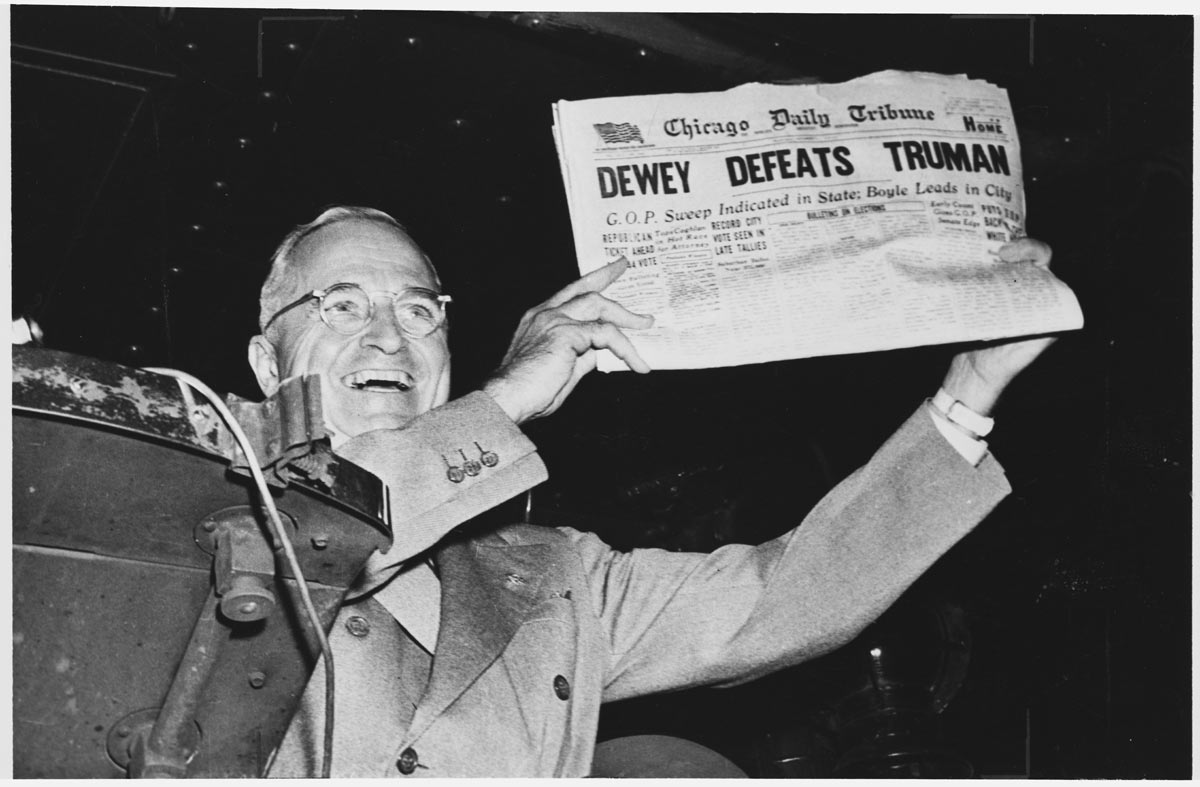
The national media didn't even seem to notice.  Mostly owned by conservatives or following "conventional wisdom", the newspapers failed to keep up with any polling past September and failed to notice Truman's public support.  It had become "conventional wisdom" that Truman was unliked and that it was due time for Republicans to return to the White House.  Assurances of Dewey's victory in November were rampant.  Right up until Election Night itself.

From the National Archives.  There's a reason Truman is smiling, and it involves being a badass.
That photo is arguably one of the most famous in American history.  One of the great reminders that "it ain't over until it's over," and that Truman had the political skill of the Active-Positive driving him to success (also it was another reminder that the geniuses inside the Beltway aren't as smart or as informed as they think they are).

The second term of office proved much tougher (history proves us that, regardless of the success or skill of any President): above all, Stalin encouraged his North Korean allies to invade South Korea, setting off the Korean War and the first major test of Truman's containment policy.

It was Truman's Confident trait that caused half the problems he faced going into this fight: he pursued an international coalition through the newly formed UN as both an effort to boost the UN's prestige and to avoid getting a declaration of war out of Congress that he felt wasn't necessary.  Both moves hurt him stateside.

The other half of the problem was dealing with Douglas MacArthur.  One of the most quixotic generals in American history, MacArthur could be a strategic genius and a tactical moron.  At the same time.  Having blundered through the first half of the Second World War and then regaining prestige and popularity towards the end of it, MacArthur was the general placed in charge of the Korean War efforts.  Pulling off one of the best military maneuvers in history at Inchon - making an amphibious assault under harsh conditions - MacArthur proceeded to overplay the UN's agenda by pursuing the North Korean forces right up to China's borders well enough for China to worry about invasion.  Despite Truman's warnings not to provoke the Chinese, MacArthur did so... and drew the Chinese 2 million strong into what was supposed to be a small-scale police action.

When the tide of fighting turned to stalemate, MacArthur pressed for the use of nuclear weapons, and worked under the belief that he had control of the arsenal - and ultimately the Army - and not Truman.  This was a critical moment in American history.  While there had been differences between Presidents and Generals before, tradition had developed that the civilian leadership controlled the military, that the President was Commander-in-Chief and that it kept the military in check.  MacArthur believed in Total Victory regardless of the objectives: Truman believed in containing Communism but avoiding perpetual warfare. Worse, MacArthur was privately and publicly undercutting Truman's authority as President.

Truman fired the son-of-a-bitch.

One other thing to note about Active-Positive Presidents: they do not do things because they are popular.  They do things because they are hard, and worth doing.  Firing MacArthur was political suicide in 1951: calls for impeachment were rampant and MacArthur returned a hero.  As the months passed and as Congress investigated Truman's decision, a lot of MacArthur's bullheaded actions were made public, and the decision Truman made became reasonable.  But the damage was done.  And Truman took the heat for it.

By 1952 the Korean War was a stalemated mess.  America got hit with a recession, and Truman's popularity was right around 22 percent, one of the lowest ratings in the history of polling such data.  When Truman's early forays into primaries for re-election went sour, he saw the writing on the wall and made the decision to not run again (he was exempt from the passage of the 22nd Amendment capping Presidential terms).  Truman did not leave office on the best of terms, but he left them on his terms and took his retirement to heart.

When historians speak of Truman's legacy, the first thing they'll note is that Truman is one of the first Presidents to have his reputation improve dramatically within years of leaving office.  It helped that a lot of what Truman believed in - keeping the New Deal agenda strong, avoiding full war in Korea/China, avoiding further use of nuclear weapons - turned out to have been the right calls.  Whenever a President drops significantly in the polls nowadays, they'll point straight to Truman and use him as an example of being unpopular but correct (despite how incorrect such a failing President might be).  Truman tends to appear in the Top Ten of any Presidential list ever since such lists were made, and if he's not he's usually slipped to Number 11.

Can't end this Truman fest without posting one of his best known quips: My choice early in life was either to be a piano-player in a whorehouse or a politician. And to tell the truth there's hardly any difference.

I motherfucking love this guy (except for the whole "Nuking Japan" thing, and even then I'll grant that was a tough call to make).  I'm glad I share a birthday with him.

Next Up: Everybody Likes Ike... Despite His Traits

Sunday, September 15, 2013

Presidential Character: Week Thirty-Two, The Two Faces Part Two

This is the follow-up to the first parter posted earlier.

Previously, on Presidential Character:
"Cut the red wire!  Cut it!"
"You don't go telling me how to stop a madman!  I'm the only one who thinks like he does!  Don't stop me here!  Or we're ALL DEAD!"
"The car's going over the cliff!  JUMP!"
"Are you telling me I'm the father?  I'M THE FATHER?"
"Mr. Worf.  FIRE..."
"Who ordered the pizza?" (explodes)

...what, had to be done.

By 1940, Franklin D. Roosevelt had served two full terms and by tradition was expected to "retire" from the Presidency to allow another candidate - Democrat or Republican by this point in the two-party system - the chance to lead.  But 1940 wasn't a normal year by any measure.

There was another world war.  Less than a generation after the Great War that Wilson sought to be the last.  And unlike the last war which focused mostly on Europe and the Middle East, this was truly a world war: Germany razing across Europe, Italy flailing across the Mediterranean and Africa, Japan marching across China and Asia.  And in most respects it wasn't the good guys winning the battlefields.  You had the fascists of Nazi Germany and Mussolini's Italy turning Europe into dictator-held hell, and the militaristic Japan leaving massacres in their wake in China.

While the trauma of the Great Depression was still affecting the United States, it was expected that the next President would either continue Roosevelt's work or the Republican come in on his own agenda.  In that regards there was no reason for Roosevelt to try for a third term.  He could have easily picked a successor from his administration who shared his goals and moved on. 

Why did Roosevelt go for a third term?

The official reason was World War II, and the fact that Roosevelt and most of the Democratic Party leadership did not trust the Republicans (who as a party were leaning Isolationist even against Great Britain) to do the right thing.  And their polling was telling the leadership that FDR was the surest way to keep the Republicans out of the White House.

But here's the truth.  A lot of it had to do with FDR's Active-Positive traits.  In certain personalities it leads to a kind of recklessness where tradition and expectations take a backseat.  Any other character trait in the office at that point in time - especially a Negative - would have stuck to tradition.  A Passive-Positive might have been talked into it, but only if there were no other voices in the party threatening to rock the boat.

While the 1940 election still went for FDR, there were now the present worries about the war storm.  The United States had remained neutral but the pressures to get involved were enormous.  The nation remained divided over the issues and with a strong pro-Bundist movement supporting Germany alongside the isolationists there was little FDR could do to help England, standing alone (at the time) against the German juggernaut.

FDR got around it with a Lend-Lease program that still upset the isolationists but basically avoided direct involvement in the war.  With regards to what was going on in the Pacific, there wasn't much the United States could do about Japan outside of boycotting and setting up oil embargoes to crimp Japan's war machinery.

In this, FDR shows the first face of the Active-Positive, thinking out solutions to achieve the long-term goal of being there for England when the United States would get dragged into the war (Nazi Germany's aggressiveness - seriously, going to war against the Soviets?  In WINTER? - made this a near certainty).  The Adaptive confidence of getting things done.

However, the reaction to the Pearl Harbor attack on Dec. 7 1941 shows FDR's darker A-P habit of overreach.  With Japan aggressively attacking the United States, the fear of the Pacific coast being vulnerable became a sudden possibility.  And with the fear of hidden saboteurs (one of the Nazis' best tricks was getting Fifth Columnist/Quislings to betray nations from the inside), Roosevelt went with one of the sorrier national security plans our nation signed off on.

We interred - basically imprisoned without evidence - 150,000 Japanese Americans, about 2/3rds of them full-fledged citizens. Wanna know how bad this was?  J. Edgar Hoover, himself a trampler of civil liberties, thought it was a bad idea.  This fear is usually something you see out of an Active-Negative?  Why did an Active-Positive sign off on it?

The Overreach that A-P Presidents indulge.  FDR had to be convinced this was something legal and legitimate, that it would settle the fears of residents on the West Coast, and at the time it had that effect.  But the long-term consequences were not, are not ever a consideration for A-Ps.  'Tis the pity, because in the long-term the nation had to pay reparations and had to recognize that it made the United States look hypocritical as an Arsenal of Democracy jailing innocent families and kids.

With regards to the management of the war effort overall, Roosevelt left it to the generals he could trust, and worked amicably with his major ally Winston Churchill from England.  He overtrusted Stalin too much, but that was more a matter of hindsight, and with Soviet Russia a needed ally to trap Hitler's Germany between two fronts it was necessary to make that deal with this particular devil.

By 1944 Roosevelt running for a fourth term was pretty much anticlimactic.  We were still in the war, the economy had finally been fixed by the massive wartime stimulus, and there wasn't any reason to throw the Democrats out of the White House.  The only big issue FDR had to worry about was his health.  He was clearly getting sicker and the leadership worried about the Vice Presidency (for probably the first time ever).  Disregarding the current Veep Wallace who was openly Far Left, they sought out the best likely replacement for FDR, someone recognized as a fervent New Deal supporter but also a solid war backer and personally incorruptable.

They went with some guy named Truman.

Next: Serving Crow Since 1948.


Thursday, June 06, 2013

June 6th, Anniversary of the Longest Day

Apologies for not getting to this earlier in the day, but it's 9:16 PM EDT right now so I got 2 hours to get it in before deadline...  It's D-DAY.

The guy waving the shillelagh is playing Captain Maud, who was on set as an adviser.  He lent the actor the very stick he's waving.  HISTORY, PEOPLE.

Dear YouTube: we need more clips of the American landings plzthxkaibye.