One of my historical interests has been the 1960s, a decade of upheaval and change that ended just before I was born. Looking back at all the events and culture that took place - the Beatles, JFK (blown away, what else do I have to say?), the Berlin Wall, Vietnam, Civil Rights, Reverend King, Star Trek, Doctor Who, the rise and fall of Hammer Horror, the changing mores of cinema and television...
At the top of the pile sits Woodstock, what would have been a relatively minor blip in history as a music and arts festival somewhere in the hills of New York state, something akin to other rock festivals of the era - Newport Jazz, Monterey Pop in 1967, Isle of Wight in the UK - meant to get a bunch of big names and rising stars to entertain about 50,000 or so and make a little money for the organizers.
Instead, Woodstock got overwhelmed by a bizarre series of mistakes and misunderstandings which led to hundreds of thousands showing up thinking the concert was free/open to the public, creating logistical breakdowns and nearly triggering a National Guard crackdown before calmer heads prevailed.
To me, the way the whole disaster unfolded and the way the people at the event handled themselves and turned it from debacle to destiny remains one of the most uplifting moments in our history. Confronted with food shortages, bad traffic, bad drugs, worse weather, missing or unavailable performers, shoddy sound systems, and more mud than a pig sty, there should have been every reason for 500,000 people to panic and riot.
But they did not. Most of them got chill, hung out with friends, played in the mud, listened to the music that did make it onstage, and behaved themselves. Volunteers popped up everywhere to keep things working, especially at the medical tents where kids tripping on the bad acid were watched over until they cleared their heads. The local town of Bethel for the most part donated food and supplies, and the visiting hippies for the most part were polite back to them. The cops didn't go out of their way to arrest anybody. Fights were few, deaths were accidental.
There are arguments in philosophy about human behavior, if people as individuals or as groups are evil or good. Rousseau argued for the latter backing a belief in the "blank slate" nature of humanity, that removed of external pressures most people will not act maliciously towards others: That when given an opportunity on their own terms to be good, people will act good.
Woodstock is a good example. Confronted with a difficult situation most people made the best of what was happening to them, and when confronted with a choice to do well to others decided to help those others.
...As Rolling Stone‘s first chief photographer, Baron Wolman heavily documented the festival, witnessing legendary musical moments like Santana’s psychedelic “Soul Sacrifice” and Jefferson Airplane’s Grace Slick belting “Somebody to Love” in her iconic silk-fringed dress. Wolman’s main focus, however, was the heart of the festival: the attendees. Whether they were camping out in tents or bathing in the nude with their children in tow, Wolman captured the essence of what it felt like to really be there...
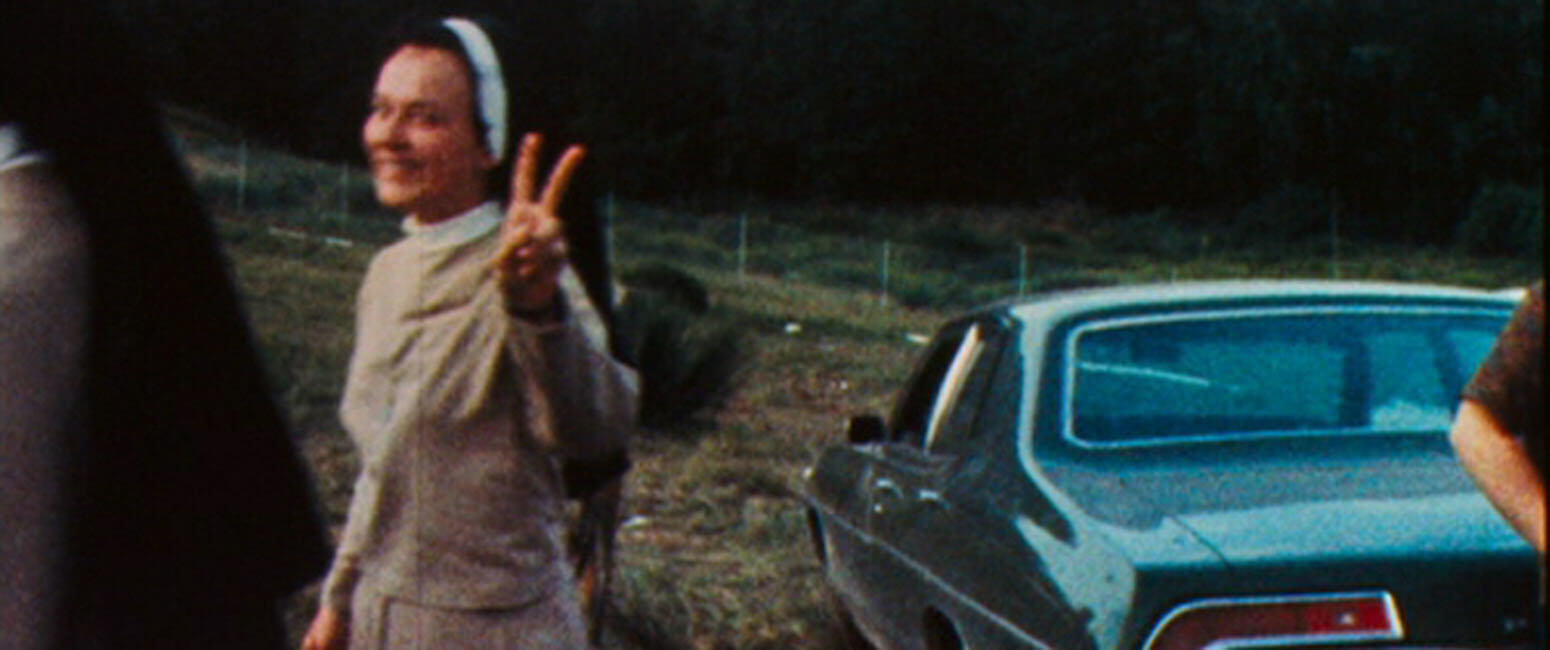
"...I never worried about my safety. I had a great time. The people in the front were starving; they ran out of food. Backstage, they had a barbecue for the performers. I didn’t realize that or I would’ve gone back and eaten, too. I would just eat whatever I could find. I was so wired and so excited and it was such an adrenaline rush because I’d never seen anything like this. I call it the gathering of the tribes, where only good things were happening. I always tell people it was a disaster waiting to happen that didn’t. That was one of the miracles of Woodstock: It could have been horrible, and it wasn’t. We all really believed, 'Wow, we can all get along! And if we can get along, maybe the world can get along.'
The military and the counterculture were at each other’s throats. It was 1969, there was still a draft, the Vietnam War was going on, everybody hated everybody. But the military came with their Medevac units and helicopters to help take away the people who had medical problems. And I thought, man, that’s the way it’s supposed to be. We’re all in the same country, why are we hating each other? The military and the counterculture, for one brief weekend, were getting along in the way it should be. But you know…the dream of Woodstock petered out pretty quickly..."
Sad but true. For all the forced attempts to recreate another Woodstock - Stones at Altamont, Woodstock '99 - none of them had the genuine intent towards the blank slate of human behavior Rousseau argued for. The Woodstock Nation, as Abbie Hoffman once proclaimed, ended up being a brief moment in time.
But an unforgettable moment. We had the benefits of filmmakers being there, album recordings made, photographs by the museum-load. It does not hurt to look back with awareness of what was a magical time and place (well, save for the 100 tons of trash the hippies failed to pick up) and dream of the possibility of finding that moment again...
Why I still sit in awe at the intensity of Santana's "Soul Sacrifice" and the drum solo:
Why I wake up some mornings to Jimi Hendrix's "Star Spangled Banner":
"We must be in heaven, man!"
P.S. No, my parents weren't at Woodstock. Not EVERYBODY was at Woodstock, okay? Just 500,000 of you, that's the max and you know it. Everybody says they were at Woodstock when they weren't, knock it off. Sheesh.
What it might have been like in July of 1969, watching as three men reached a faraway moon, and two of them landed there to prove humanity had the knowledge and the means to reach beyond our earthly shores.
I think I've asked Mom and Dad once what it was like for them watching this all happen in real time - my twin and I weren't born until 10 months later - but I can't recall now what they said. I think they were traveling in Europe at the time (Dad was doing a Mediterranean cruise as a Navy pilot then). Update again: Mom messaged back that she was staying with her parents in Birmingham at the time studying for her Masters, my older brother was two-ish so he probably was too young to notice, but she and my grandparents watched it all from the telly. She didn't join up with Dad in the Mediterranean until August.
Just to mention: The library where I work is doing a space-themed Summer Reading program, and part of it has been the dedication to the 50th anniversary of the Moon landing. One thing I helped work on is a Lego display of the Lunar Lander:
"That's One Small Step for a Lego... One... Giant Leap for Legokind!"
There's also this live app - Apollo 11 In Real Time - running that simulates the Mission Control for the launch and mission.
The John F Kennedy Library - as JFK was the one who pushed for the moon landings as a decade-ending goal - is doing their own launch app.
EXCITING TIMES AGAIN, HEWMONS.
Yet the vows of this Nation can only be fulfilled if we in this Nation are first, and, therefore, we intend to be first. In short, our leadership in science and in industry, our hopes for peace and security, our obligations to ourselves as well as others, all require us to make this effort, to solve these mysteries, to solve them for the good of all men, and to become the world's leading space-faring nation.
We set sail on this new sea because there is new knowledge to be gained, and new rights to be won, and they must be won and used for the progress of all people. For space science, like nuclear science and all technology, has no conscience of its own. Whether it will become a force for good or ill depends on man, and only if the United States occupies a position of pre-eminence can we help decide whether this new ocean will be a sea of peace or a new terrifying theater of war. I do not say the we should or will go unprotected against the hostile misuse of space any more than we go unprotected against the hostile use of land or sea, but I do say that space can be explored and mastered without feeding the fires of war, without repeating the mistakes that man has made in extending his writ around this globe of ours.
There is no strife, no prejudice, no national conflict in outer space as yet. Its hazards are hostile to us all. Its conquest deserves the best of all mankind, and its opportunity for peaceful cooperation many never come again. But why, some say, the moon? Why choose this as our goal? And they may well ask why climb the highest mountain? Why, 35 years ago, fly the Atlantic? Why does Rice play Texas?
We choose to go to the moon. We choose to go to the moon in this decade and do the other things, not because they are easy, but because they are hard, because that goal will serve to organize and measure the best of our energies and skills, because that challenge is one that we are willing to accept, one we are unwilling to postpone, and one which we intend to win, and the others, too.
It is for these reasons that I regard the decision last year to shift our efforts in space from low to high gear as among the most important decisions that will be made during my incumbency in the office of the Presidency...
There's just something about the fact that 500,000 people gathered together in terrible, rainy, muddy, starving, and for some drug-hazed, conditions in the heat of August (even in New York) in the middle of Max Yasgur's farm outside of Bethel, and most basically walked away in good spirits and incredible memories.
For a weekend in 1969, they had a population that rivaled major cities. You could tell because the traffic was f-cked up.
For all the fears about getting so many young adults, likely on drugs - it got to where the Governor Nelson Rockefeller was just seconds away from calling in the National Guard, with the local law enforcement arguing against it - and potentially in a mood to riot if conditions got bad... nothing violent happened. Well, there were obviously a bunch of fights here and there (one food vendor burned down because they were inflating prices on their burgers) but for the most part people worked to keep the weekend event going. The local townsfolk volunteered to help with food rations. People did duty as first aid medics. Bands did extra sessions on stage to cover for acts that had to be flown in by helicopter.
It wasn't pretty.
But it was beautiful.
Usually in history when you get 500,000 together in one spot for an event, it tended to be a battlefield, massive armies pummeling each other into blood and death. Woodstock was one of those rare moments when that many people got together for a weekend to delight and enjoy and commune. Some didn't come away with that feeling, but many others did.
It was one of those moments that proved Rousseau right: that in a confusing and chaotic environment, coming at a problem with a blank slate, most humans would behave in their self-interest but towards a common good. At Woodstock, where people didn't know exactly what was going on, tried to behave as well as they could under the circumstances.
It was a situation where people more often shared their food rather than steal it. It was a situation where people took total strangers to the medical tents and helped out. It was a situation where one guy manned the Port-O-Sans to keep them clean and did it with a happy grin on his face.
Speaking of, I am sending up flares to Mr. Michael Taggart again. You left a comment on that Woodstock blogging I did about your father, but you didn't leave a contact email. PLEASE email me back, sir. I really want to hear your story.