Showing posts with label music. Show all posts

Friday, August 15, 2025

Time for More Woodstock Reminiscing As the World Burns

Yeah, I'm still here. Struggling to focus on any particular outrage at the moment, so I'm going to think of happy thoughts instead.

Edit: Thank you Steve in Manhattan for sharing this at Crooks & Liars' Mike's Blog Round-Up. And to the National Guard people getting shipped away from their families and work in order to invade DC on the Shitgibbon's orders, you always have the option to quit the Guard so you won't attack your fellow Americans.

Ever since I learned of Woodstock as a lad, I remained intrigued at the confluence of events, the tiny miracles, the realization that for the most part the people who attended were in good spirits and enjoyed the experience. I found a YouTuber sharing slides where they had attended in person:


The music was a key part of the festival, but the people who were there made it historic.

...okay enough said, here's more Santana!


Thursday, July 04, 2024

Hark! A Ranking of Doors Albums!


Is everybody in? Is everybody IN??? The ceremony is about to begin...
-- "Awake," the Doors (Jim Morrison)


Growing up the Tampa Bay area as a suburban white boy meant listening to hard rock n roll. Not "classic rock" which at the time meant the 50s, but "album-oriented rock" that dominated the 60s and 70s.

As such, I was raised on the likes of Led Zeppelin and the Who and Van Halen and Black Sabbath and Cream and Montrose and Creedence and Lynyrd and Hendrix (but also softer sounds like the Beatles and Fleetwood Mac and Moody Blues). Into all of that I also got into a band that had a short history but incredible impact on that era: The Doors.

Forming on the Los Angeles music scene in 1965, the Doors revolved around keyboardist Ray Manzarek and Jim Morrison, someone Ray knew from film school at UCLA. Morrison had confided to Manzarek that - as a wannabe poet - he'd been writing lyrical poems, and sang to him the earliest verses of "Moonlight Drive". Manzarek was convinced right then Morrison could be a singer, and brought along one of his brothers, bassist Patty Sullivan, and drummer John Densmore (whom Ray knew from a meditation group) to form this group named after Adolus Huxley's work The Doors Of Perception.

After a few shifts in the lineup - adding guitarist Robby Krieger to form the lineup we know today - the band recorded demos and worked their way through the clubs, earning a coveted spot as house band at the Whisky A Go Go.

Signed to Elektra Studios by 1966, controversy over their firing from the Whisky in August 1966 - when Morrison went explicit with that particular lyric in "The End" - added to the band's allure for their debut album by 1967.

The band's sound was an eclectic mix of electric blues, jazz, and the emerging psychedelic sound dominating the California scene. Guitarist Krieger was noticeably versatile compared to other guitarists of the era. Drummer Densmore employed effective range and included a lot of Latino (bossa nova) influence that gave the band a distinctive sound that felt like Los Angeles itself. Manzarek proved an adept keyboardist with an organ-type playing that sounded like a harpsichord, and allowed him to mimic bass-playing to where their live shows never needed one (the band did employ a slew of session artists to play bass in the studio).

Topping it all, however, was Morrison. Initially shy as a singer, something about being on the stage unleashed a performer few had ever seen in rock music. While there were other lead singers of bands who would strut or pose - Mick Jagger comes to mind - none of them reached the recklessness Morrison achieved (Jagger later went to him for advice on how to do it). He would cover every inch of the stage, act out scenes from the lyrics with his body, improvise poetry to any instrumental music during a jam. He became a shaman of sorts, seducing audiences with a wink and a snarl.

The band quickly hit it big on the charts - they were the first American band to "go gold" with their first seven albums - and even scored top single hits guaranteeing radio play. As a live act, they became must-see tickets. Morrison's reputation as a "bad boy" of rock n roll brought fame... and interest by law enforcement who were put off by the anti-war and counter-culture lyrics that filled the followup albums.

Morrison himself suffered to his demons. He had a history of disturbing behavior when he got drunk, and as the stresses of celebrity got to him the alcoholism - and other drug use - got worse. It affected recording and made him late for live shows during tours. By 1969, it had gotten so bad he pretty much had a breakdown on stage in Miami, threatening to show his cock (eyewitness testimony and insistence from the surviving band was certain he didn't) and then leading a riot of sorts with the crowd. The subsequent trial for incident exposure and other acts led to a guilty verdict in 1970.

While out on appeal, Morrison rejoined the band in L.A. to record one more album (L.A. Woman) before traveling to Paris in 1971 to get himself straightened out. The band noticed he was working to stay sober during the sessions and seemed in good spirits.

And then Morrison died - with a sizable amount of mystery over what actually happened - and was quickly buried in a Paris cemetery famed for its artists and poets.

The surviving trio - Manzarek, Densmore, and Krieger - recorded two more albums without replacing Morrison at singer, but the efforts were noticeably lackluster with fans and the Doors broke up. After rejoining in 1979 to record new music to back audio readings from Morrison's poetry, that was pretty much it.

The band's influence remains far reaching. Not only codifying the four-man format of a rock band but affecting the electric blues style that remains a staple of bar bands to this day. Musically, the Doors had a hand in popularizing 60s psychedelic rock as well as help merge the Latino rhythm sound - which would co-mingle with the coming funk scene of the 70s - to the L.A. hard rock scene that would remain dominant until the 80s. In some respects, the dark symbolism and anti-authority stances the band took as its persona influenced the burgeoning punk scene.

Morrison's on-stage antics informed the crazy behavior of future frontmen - David Lee Roth comes to mind - and his lyrical style - more freestyle than rhyming, although he could do both - set the standard for poetry in hard rock songs. There are others in rock history with high skill as poets - Bob Dylan is a freaking Nobel laureate, obviously - and others aspire to reach those heights, but Morrison was one who could arguably be Dylan's peer (alongside John Lennon, Joni Mitchell, several others). Morrison himself became the template for the "rock star as tortured artist" imagery we have to this day.

In terms of ranking the Doors albums, I'm going with - in my opinion - weakest works to their most epic, must-have albums. To be fair to the band as a whole, I've included the post-Morrison albums - which I didn't hear as a kid, they were out-of-print until CD re-issues finally happened in the 2010s - so I can share my experience and response.


The program for this evening is not new
You've seen this entertainment through and through
You've seen your birth your life and death
You might recall all of the rest
Did you have a good world when you died?
Enough to base a movie on?
-- "The Movie," Jim Morrison

Ranking Doors Albums - Weak to Epic

Title: Other Voices

Reasons: The first album by the surviving trio, and you can immediately sense the loss with the opening song being an almost chirpy, upbeat kind of thing. The hell?

With Manzarek and Krieger taking over at vocals - neither of them able to reach the low seductive growl that Morrison could - the songs just don't have that dark edge to them. The lyrics themselves read like forced attempts at rhyme, rather than the near improvisational flow Morrison could weave.

Coming out at a moment when funk as a sound became popular, you can see the attempt by the band to stay relevant and avoid the harder elements of the electric blues style. But it's the songs on here that stick to that style that impress, and it'd have helped if they stayed that course.

Epics song(s): none
Great song(s): Tightrope Ride, Hang On To Your Life
Good song(s): Variety is the Spice of Life, Wandering Musician

Title: The Soft Parade

Reasons: Generally considered the weakest effort by the band while Morrison was alive, and the album title tells the tale. "Soft" is the first word I think of when re-listening to this. Going more in the popular sound, bringing in a string orchestra as backing music to much of the performances, makes this a more pop-flavored, sickeningly sweet sound. Gone are the rough edges that made the first three albums more appealing to the fanbase.

Notable as the point where Morrison was falling to the bottle, his erratic behavior allowed the other band mates - Krieger in particular - more room to write their own lyrics and decide on the music getting played. The whole album is anchored by the titular track - yet another long song much in the vein of "The End" and "Turn Off the Lights" - that tries to reach again for those poetic highs but ended up garbled and uninteresting. A shortened, tighter-edited "Soft Parade" would have been so much better.

There are songs on here worth saving - and the hit single off this "Touch Me" did was it was supposed to do, sell records - but it's an effort you can skip once you download/stream those handful of songs.

Epic song(s): None
Great song(s): Touch Me, Do It, Wild Child, Wishful Sinful
Good song(s): Running Blue

Title: Full Circle

Reasons: I was dreading the follow-up to Other Voices as sinking lower in terms of non-Morrison input, but this album was actually likable to where I could re-listen to it again as a refresher and remember what I enjoyed.

There was still a 70s funkadelic vibe to much of the work, but they had mixed it in - in my opinion, rather well - with the Latino backbeats to give some of the songs the edge that the other album lacked. Where the songs struggled were - again - the lyrics, which aimed at simplistic rhymes and none of the imagery Morrison could add. The one song on this album that did become a hit at its release - "The Mosquito" - is a good example: the opening lyrics were painful and forgettable, but the music itself that takes up most of the performance is pushed by an uptempo rhythm that made an incredible instrumental piece.

Just saying, if Morrison had lived songs like "Hardwood Floor" and "It Slipped My Mind" would have been darker and rueful and oh so good on the radio.

Epic song(s): none
Great song(s): Good Rockin'
Good song(s): Verdilac, Hardwood Floor, The Mosquito, It Slipped My Mind

Title: American Prayers

Reasons: Essentially an excuse by the surviving bandmates to provide a soundtrack to unearthed poetry readings and interviews that Morrison gave. The good news is that the band is made up of talented musicians who knew what they were doing and created a solid mix of back beats and melodies to fit (most) of what the poems and observations offered.

There isn't anything here - other than snippets from existing songs like "Peace Frog" and "Texas Radio" - that would be considered single or stand-alone hits. Some are not poems, just Jim acting out scenes from lyrics formed elsewhere. You kind of need to listen to the whole album and get through each poem as is, and appreciate if you can how Morrison mixed the innocent with the obscene. Some of this would be considered pornographic - and racist - even for its day, so do be aware this isn't a family-friendly listen.

Epic poem(s): Angels and Sailors, Stoned Immaculate, The Movie, The Hitchhiker
Great poem(s): Awake, Ghost Song, Dawn's Highway, Newborn Awakening
Good poem(s): To Come of Age, Black Polished Chrome, Latino Chrome

Title: Waiting for the Sun

Reasons: This is a rather schizoid album. On the one hand, this contains some of the most critical anti-war songs the band would ever produce. On the other, this contains most of the love songs the band would ever put to one album.

Bouncing between the giddy eagerness of the opening hit "Hello I Love You" and more somber works like "Love Street" and "Wintertime Love" (styled as a moody waltz), along with the utterly dark "Unknown Soldier" (live performances would have Morrison stand and fall as a soldier getting executed) and "Five to One" (an ode to street fighting with memetic lyrics like "No one here gets out alive" and "they got the guns but we got the numbers"), this is not an album to listen through in one sitting.

Accompanying the album was a long-form poem "Celebration of the Lizard" - which makes up the lyrics to a number of songs here - invoking the chaos and violence of the late 1960s, including direct references to JFK's assassination. The poem itself is a rambling mess, which probably explains how the band decided to break it up into more digestible segments.

This is almost on par with the best albums, and I end up ranking this near Morrison Hotel. It's a question which one is better than the other. so...

Epic song(s): Hello I Love You, Unknown Soldier, Five to One
Great song(s): Not to Touch the Earth, Spanish Caravan
Good song(s): Love Street, Wintertime Love, My Wild Love, We Could Be So Good Together

Title: Morrison Hotel

Reasons: Coming after the critical backlash of Soft Parade, and after the disastrous Miami concert that summarily ended their US tour, the band went back to the studio for a stripped-down, back to basics approach. Gone from this album are any poetic aspirations tying everything together, instead focusing on stand-along songs.

The result was obviously a return to form, but also greater improvement in the quality of songs produced. There's no long, eight-minute or ten-minute song on here: Everything is tight, focused, and hard rocking. The opening song "Roadhouse Blues" sets the tone, and in my opinion is the best song the band ever recorded: I would argue it's the best "play this in a bar even though I normally don't hang around bars" song. That song is the reason why I rank this album higher than the previous one.

This tends to be a popular album among fans, myself included. You might notice the phrase "Blood in the streets" in the song "Peace Frog" shows up whenever I blog about gun violence in any of our communities, yeah this is where I get that from.

Epic song(s): Roadhouse Blues, Peace Frog, Queen of the Highway
Great song(s): Waiting for the Sun, Land Ho!, Maggie M'gill
Good song(s): You Make Me Real, Blue Sunday

Title: Strange Days

Reasons: I once noted that second albums from bands tend to not do well. Either suffering from the expectations of the first big hit album, or dealing with leftovers from the first album's recording sessions, or the band making the mistake of going for a New Sound too early.

Strange Days doesn't suffer the sophomore jinx even though it does show some holdover from the first album. What happened was a change in technology - the studio just added an 8-track recording system allowing for more overdubs - that gave the band a chance to experiment. One of the results was the nightmarish "Horse Latitudes," which you can appreciate for the effort but ye gods is a hard listen.

While not a New Sound, this album ended up with tracks that fell well into the psychedelic sound of the late 60s, as a result not as enjoyable or as straight-forward as works like Morrison Hotel. The Doors did create on this album some decent songs still playable today. However, the overt attempts at poetry - such as the overlong "When The Music's Over" - trying to replicate the success of "The End" comes across as forced.

Epic song(s): Love Me Two Times, Moonlight Drive, People Are Strange
Great song(s): Strange Days, You're Lost Little Girl
Good song(s): Horse Latitudes, My Eyes Have Seen You, When the Music's Over

Title: L.A. Woman

Reasons: As Morrison's legal woes piled up, and as his mental condition deteriorated, the band decided to stick to the stripped-down effort of the previous Morrison Hotel. Going with a new producer, and with Morrison doing his best to stay sober, the sessions for this album went smoothly and everything about its release pointed to good things ahead.

The critics and fans raved about it being their best one since the first, the single release of "Love Her Madly" going up the charts, just as word got back from Paris about Morrison's death. As a result, this album carries with it to this day a lot of historic and symbolic weight.

The most noticeable element is how deep and scarred Morrison's voice had gotten by this album: the toll of alcohol and cigarettes and drugs were adding up. This does give the songs a darker, bluesy edge and a more cynical tone on an otherwise upbeat song like "Love Her Madly".

What puts this album at the top of the list are the epic songs here, especially the title track "L.A. Woman," a song close to 8 minutes but shockingly never feels like it's playing that long. The lyrics comparing the city to a woman - no, that the city IS a woman - is arguably one of the greatest odes to L.A. ever recorded, and the band's performance - Krieger's opening guitar growl mimicking a car engine above all - a soundtrack to blast from the car speakers when you find yourself on an open freeway across the city.

Throw in how "The WASP" - a thread of free verse poetry full of mythological imagery - and "Riders on the Storm" are Morrison's lyrics at his quotable best and you have an album that deserves great acclaim.

Epic song(s): Love Her Madly, L.A. Woman, The WASP (Texas Radio & the Big Beat), Riders on the Storm
Great song(s): The Changling, Been Down So Long, Cars Hiss By My Window
Good song(s): L'America

Title: The Doors

Reasons: I have noticed I rank a lot of bands' first album releases as their best, and there's often a good reason (or three) for that. One, it's made up of songs that the band played, practiced, enhanced over and over until they were good enough to win over live audiences and get a recording deal signed. So these songs are well-vetted. Two, these are also the songs that set the band's lyric and tonal styles, playing to the strengths of one of the bandmates - say, a great guitarist or a great drummer - that ends up getting replicated to later albums that don't sound as fresh or inventive. Three, some of the longer-lasting bands will go through an experimental New Sound phase that becomes an ill-advised mess, or they're trying to keep up with trends that shift over the decades to where their later work just can't match up what made them so go in the first place.

That said, the Doors' self-titled debut was one hell of a breakout for a big year - 1967 - in music, which introduced their signature styles - Manzarek's complex organ keyboards, Krieger's fluid guitar work, Densmore's jazz drums, Morrison's then-soft baritone growl - and set the tone for how electric blues should sound in night bars and garages across America. Opening with the energetic "Break on Through" - a fast-moving song that doesn't give listeners a chance to pause - the rest of the album slows down a bit to let the lyrics and beats seduce. The languid, moody "Crystal Ship" is a personal favorite.

Anchored on Side One with the band's biggest hit "Light My Fire," Side Two ends with their darkest and most epic song "The End," a near-operatic nightmare trip through Morrison's Id that would make Freud and Jung run away in fear. Noticeably long (over 11 minutes!) and chaotic, the mixture of shifting lyrical imagery to varying tempos and intensity just seems to work on this song where it didn't in follow-up attempts.

I also want to note as a product of the time, a number of these songs - hell, a lot of songs across the Doors' playlist - describe rather shocking (misogynistic) behavior towards women when heard today. While I list a couple of those songs here, I do want to say I don't agree with the lyrics to them. It's just... they are good songs.

Epic song(s): Break On Through (To the Other Side), The Crystal Ship, Twentieth Century Fox, The End
Great song(s): Soul Kitchen, Light My Fire, Take It As It Comes
Good song(s): Alabama Song (Whisky Bar), Backdoor Man

--

Just to let you know, it was doing a "Hark!" either for the Doors or Led Zeppelin, and because it's the 4th of July I went with the American guys. Led Zep is next, peeps.

I'll tell you this
No eternal reward will forgive us now for wasting the dawn
-- from "The WASP (Texas Radio & The Big Beat)," Jim Morrison


Friday, April 05, 2024

Anniversary: My Generation, Still Coping

It's April 5th, which for a solid number of Gen Xers is a melancholic anniversary. I wrote this ten years ago:

But it was a little-heralded band out of Washington state - part of the Seattle music scene that soon became known as "grunge" - called Nirvana that blew the speakers out of every teenager and college student's sound systems that year.  A song - "Smells Like Teen Spirit" - that was part Ramones up-tempo rock, part metal, part protest - just hit the right damn notes with the Gen X age group.  From epic opening riff to the fading scream of singer Kurt Cobain shouting "A denial...", it spoke to a generational apathy of teens and college students who wanted to unplug from a crazy world, couldn't, and just had to cope.

Nirvana went from a garage band that traveled to shows in beat-up vans to a headlining act filling packed arenas and stadiums.  Cobain became the iconic grunge rocker: dressing in hand-me-down flannels, with shaggy hair and three-day beard growth, walking about with a dazed look in the eyes and a knowing grin.  Everyone thought it was cool.

Except for Cobain.  He never asked to be a hero or a rock star.  He wanted to be a rocker, sure, but someone who plugged in, played a few chords, moved on.  He had his own heroes - other post-punk and college radio bands that he eagerly talked up in interviews, which gave them brief bumps in popularity - but he also had his own demons...

Cobain didn't expect so many people to get into what he was doing, and was dismayed a lot of his work was getting overplayed... or worse played out of context.  One of the things that haunted him was finding out his song "Polly" - a disturbing tale of an unconcerned man raping a girl, based on a real-life serial rapist who haunted the Pacific Northwest - was being sung by two rapists assaulting their own victim.  Cobain got disgusted finding out that as Nirvana got more popular they were attracting the same jerk jocks and frat-boy bullies that made his teen years a living hell, many of them not even getting the fact that a lot of Cobain's own songs were raging against them.

Not helping matters were Cobain's history of drug use - some of it psychiatric, some of it to cope with a chronic stomach ailment, some of it recreational with the hardest of them being heroin - and getting into a volatile relationship with Courtney Love.  Due to the couple's drug use, they temporarily lost custody of their daughter Frances Bean and he continued to live under the fear of losing her again.  In this environment, a handful of drug-using moments seem to turn into suicide attempts.

By the end of March 1994, Cobain was confronted with an intervention and convinced to put himself in detox/rehab in Los Angeles.  He only stayed for about a day, then hopped the clinic's six-foot wall and fled.  By April 2nd, he was spotted in a few places around his stomping ground Seattle.  By April 5th, he ended up at his big secluded home.  His body was found April 8th, shotgun to the head, body pumped of heroin, a suicide note nearby...

Man, I've been blogging so long even my articles are having anniversaries. But I digress.

As I've noted before, my generation - X - remains an odd, almost schizophrenic grouping split between overly aggressive conservative wingnuttia and the apolitical disaffected. Caught between the hypocrisy of the Boomers and the confusion of the Millennials, we've become a rather cynical, disconnected lot. Cobain's fate seems to echo down the years for us.

We're in our fifties now, well into aging parenthood with OUR kids graduating college while we're sitting around wondering where our MTV went (music videos are mostly on YouTube anymore). We're a bit miffed that CDs are getting phased out for streaming services, unable to place our Nirvana albums on any sound system that might still be in our living rooms. At least vinyl is making a comeback.

Time keeps moving. We're further away from April 1994 than ever before, and next year will be farther still. Frances Bean is in her 30s now, just married her second time and trying to get on with her life, and it's just a sad regret that Kurt didn't stick around to see if she's happy or not. 

Tuesday, July 04, 2023

Hark! A Review of Bruce Springsteen Albums

As appropriate for a Fourth of July "Four For the 4th" blogging effort, here's my look back at all of the Bruce Springsteen studio albums of the past 50 (!) years. Took me months to write this...


As I've mentioned earlier, I attended a Bruce Springsteen concert last February. As a long-time fan since the early 1980s - honestly before Born In the USA blew up - going to a show was one of those things you gotta do in life. Springsteen is legendary as a live artist, with marathon shows, crowd-sharing antics, emotional intensity that can overwhelm an arena (or even stadiums). Alas, over the years I 1) did not have the budget for it and 2) missed at the few times he toured when I could afford it due to work or calendar conflicts. This time around - facing the reality that Bruce is in his 70s and the odds of him touring will diminish - I planned feverishly to try and get tickets for his 2023 tour that just happened to start in my backyard of Tampa FL.

Goddamn Ticketmaster screwed me up when I tried to get the tickets though. I had to get bailed out by my brother Phil - also a big fan - who was able to scoop up the scalped tickets a month before the show. You do see him and my sister-in-law Karen in some of the photos I blogged gushing over the show.

Having done that, I felt I was overdue in going through the vast discography of Bruce - dating all the way back to 1972! - and so here I am, taking note of how THE BOSS rose from the mean streets of Freehold New Jersey to world domination in a career spanning more than 50 years.

Springsteen began like most rockers playing as a garage band, working his way up to gigs around the towns with fellow teenagers. Joining up with bands calling themselves the Castiles, and then later another group Steel Mill, Springsteen formed his own band and got the attention of Columbia Records around 1972. Coming in with the "Jersey Bar" sound mixed with expectations of being a folk-acoustic performer akin to Bob Dylan, Springsteen's early work impressed critics but didn't sell a lot of records. It would take the word-of-mouth regarding his live shows - overwhelming, epic nightly performances compared to religious experiences - to form his fanbase as his career improved into the late 1970s, especially as his third album "Born To Run" proved to be his home run hit.

Never as great a poet as Dylan, Springsteen's true strength proved to be storytelling, especially in the live shows where he would intermix tales of him growing up in both a turbulent era - Vietnam especially haunts him and his circle of friends - and a turbulent home with the songs that came from those experiences. 

In 1984, the unexpectedly huge response to Born In The USA catapulted him to uber-celebrity status to where "The Boss" became the cornerstone of classic American rock-n-roll. While Springsteen's fame ebbed during the 1990s, he maintained a schedule of new releases (and re-issues of older material to explore his outtakes and musical pathways) to keep himself at the top of the game.

It would take forever for me to rank all these studio albums - although some are clearly my favorites and several are "What the hell were you thinking, Bruce?" - so a chronological retrospective is more in order. There is much like the Beatles an evolution to Springsteen's musical history, shifting from mood to mood and band line-up to solo works. In some respects, Springsteen chronicles the ebb and flow of American history - the angst he felt as part of the Vietnam generation, witnessing the fall of union labor and rise of economic turmoil in his New Jersey communities, the horrors of 9/11, and the insights of growing up and growing old - from the turbulent 1960s onward.

Title: Greetings from Ashbury Park NJ (1973)

Importance: As his debut album, Springsteen was expected to make his impact on the early 1970s music scene, which at the time was dominated by blues or acoustic folk acts filling the void left by the Beatles breaking up. The company wanted a full acoustic album of just Bruce on guitar, but Bruce included his band on most recordings, and there got to be a fight over it. The album ended up being a mix of both, with Springsteen writing and mixing with limited help "Spirit In the Night" and "Blinded By the Light" to appease a studio exec who felt there were no singles in the original playlist.

The critics loved it, but for myself the album is (still, years later) too raw. Where some bands jump out with a hot first album, this one sounds and feels like a rookie effort from someone who hadn't figured it out yet. Lyrics - trying hard to tell stories instead of setting mood - didn't always keep to the rhythm of the songs. Lacking the confidence, poise, or emotional maturity that would show up later. Even the later live performances of these songs are improvements to these early efforts.

It doesn't hurt to listen to "Greetings" to get an idea where Springsteen started from, but don't expect to get blown away by this. (And Manfred Mann did a better version of "Blinded By the Light")

Epic Song(s): None
Great Song(s): Growin Up, Spirit In the Night, It's Hard To Be a Saint In the City
Good Song(s): Does This Bus Stop at 82nd Street, For You


Title: The Wild, The Innocent, and the E Street Shuffle (1973)

Importance: This is where following Bruce as he evolved from album to album helps. You can hear the improvement in melody and meshing the rhythm to the lyrics compared to "Greetings."

No longer expected to be an acoustic solo act, Springsteen was able to bring in a full band now going by the E Street moniker, especially saxophonist Clarence Clemons, organist Danny Federici, and bassist Garry Tallent (all major members of the band for much of its history). Along with drummer Vini Lopez and pianist David Sancious, they filled out the blues (with a bit of funk rolled in) band lineup that would make the Jersey Bar sound work for Springsteen's style. With this sound Springsteen's confidence grew, especially as he took this on tour where the E Street performances wowed audiences coast to coast. The song "Rosalita" while not a big single release became Springsteen's signature song on stage.

If I encourage anyone to listen to Springsteen, I would tell them to start with THIS album first.

Epic Song(s): Rosalita (Come Out Tonight)
Great Song(s): The E Street Shuffle, 4th of July Ashbury Park (Sandy), Kitty's Back, Incident on 57th Street
Good Song(s): none (New York City Serenade is too freaking long, and Wild Billy's Circus Story too weird)


Title: Born to Run (1975)

Importance: By this point, due to low sales of the first two albums, Bruce was facing a make-or-break. The critics loved him, the live crowds adored him, but the record-buying markets did not. Willing to shift to a new sound, aiming for the Phil Spector "Wall of Sound" style to make his music more radio-friendly, Springsteen worked on lyrics more profound and on music more operatic (even as he cut back on the playtime of most songs to fit within the 5-minute clock that radio stations prefer songs fit into). He brought in new help - music critic Jon Landau who became a fan of Bruce during his big tour ("I have seen the future...") - and filled out the E Street Band with old friends (Steven Van Zandt especially) he could trust.

The end result was a more packed, coherent album that played like a self-contained rock opera (although the songs themselves did not relate to each other). Although he attempted to downplay the New Jersey narratives that reflected his first two albums, this one still spoke - especially "Born to Run" and "Jungleland" - to the experiences of growing up in (and growing out of) the Garden State.

Born To Run turned out to be not just Bruce's breakout hit, it proved to be one of the greatest albums of all time. His romantic lyrics finally reached a confidence that matched the best poetry out there (without having to delve into the symbolism that Dylan would). I had "Thunder Road" taught to me in a college class by a professor who was wowed by Bruce's word choice and narrative skill. Most of the songs are radio staples to this day, and several - including the band's autobiographical song "Tenth Avenue Freeze Out" - are concert favorites well into 2023 (I can vouch for that). 

If there's anything jarring in my mind it's "Meeting Across the River," a spoken-word tale in the style of 1940s crooners (think Frank Sinatra) that works better as a short story than a lyric. But it still foreshadows a lot of the darkness and desperation that would appear in Springsteen's later works (hint Nebraska hint).

There are no serious misses on this album. This is why I compared it earlier to epic albums like Joshua Tree, Nevermind, and Revolver (or Rubber Soul, or Abbey Road, or...)

Epic Song(s): Thunder Road, Tenth Avenue Freeze Out, Born to Run, She's the One, Jungleland
Great Song(s): Night, Backstreets
Good Song(s): Meeting Across the River


Title: Darkness on the Edge of Town (1978)

Importance: After the epic high of Born To Run came this mood twister of an album. Reflecting Springsteen's sour mood after a prolonged legal battle with his previous album producer, and reflecting the national mood as the 1970s saw economic decline across the blue-collar places that Springsteen felt connections to, Bruce and his bandmates crafted enough songs during this period to fill at least four albums' worth of music (which would show up later in re-release albums dedicated to the outtakes like The Promise).

Eschewing the "Wall of Sound" production style, this album goes with a more punk mentality even as the orchestral band sound powers through. The lyrics take on darker themes (hence the album title and main song anchoring the whole thing) to where Bruce is questioning just what America really means.

For myself, I put this album ahead of Born To Run in terms of artistic and lyrical quality. When I had a poetry collection assignment for a creative writing class in high school, this was the album I listened to and inspired me to write each poem for that assignment (I got a good grade, might have been an A). My mom saved the typed pages, I hope I've still got them in storage somewhere...

Epic Song(s): Badlands, Candy's Room, The Promised Land, Prove It All Night, Darkness on the Edge of Town
Great Song(s): Something In the Night, Streets of Fire
Good Song(s): Racing In the Streets


Title: The River (1980)

Importance: Every artist seems to want a double-album release somewhere in their career, so Bruce decided at this point to drop this massive opus on America just as the national mood shifted from the miasma of 1970s to the (false) sunlight of a Reagan dystopia. Either that or Bruce's experience of weeding down from his previous album Darkness (some of those outtakes survived onto this album) convinced him he might as well release most of what he and the E Street Band did just to get it out there (there WAS an early version of this called The Ties That Bind as a single album, but Bruce rejected that and recorded even more songs to make The River).

Where Bruce claimed Born To Run was an album based on the American experience, this album truly was: Running on themes of families drifting away, hopes dashed, relationships failing, and a sense that everything the Boomer generation grew up to disappearing into scrapbooks and faded memories. There were frivolous rockers like "Out In the Street," "Cadillac Ranch," and "I'm A Rocker" on here, but dominating this album were cynical, heartfelt songs like "Hungry Heart" and "Point Blank" and other, slower tunes that echoed the melancholy of Darkness.

Like most double-albums, fans can argue about what songs shouldn't have been included to reduce the album to a more manageable single release. For myself, the final quarter of this - on vinyl, it'd have been Side Four, on CD it's the second half of Disc Two - were slow, painful listens and I haven't been a fan of those songs. However, I am a huge fan of "Point Blank" which has a similar slow and mournful style but yet carried more powerful lyrics and emotional heft as Bruce performs it. I woke up one morning to "Point Blank" playing on the radio, and I lay in bed listening to it and I swear it played for like 12 minutes and I felt every second of it.

Bit of trivia: Bruce wrote the song "Hungry Heart" for the punk band Ramones, but Landau talked him into keeping it for himself. It turned into Springsteen's first Top Ten hit song. What would the music world be like if the Ramones had gotten that song and it took them to the Top Ten?

Epic Song(s): Hungry Heart, Out In the Street, Point Blank
Great Song(s): The Ties That Bind, Two Hearts, You Can Look (But Better Not Touch), Cadillac Ranch, I'm a Rocker
Good Song(s): Sherry Darling, The River, Fade Away


Title: Nebraska (1982)

Importance: All of the darkness and cynicism creeping into Springsteen's early work reaches an epic apex with this album, arguably a solo work with sparse inclusions of other E Street band members. "Sparse" is a good word for this album, as it tears down the American Dream and shakes loose a lot of the nightmares haunting the nation as crime and despair followed the collapse of blue-collar communities Bruce called home.

The recording history for this album took on legendary status: Springsteen recorded a bunch of new songs onto a single recorder, planning to have the E Street re-do them into more rounded rock-n-roll numbers similar to Darkness and River. Thing was, when they did record the "electric" version of most of those songs, Bruce realized the original solo takes were the better versions and decided to release a cleaned-up set of songs from that. Several of the songs recorded from this period would end up as full E Street songs on Born In the USA, meaning there are at least nine known unreleased songs as well as the full-band versions of several of these songs in the vault that fans would love to hear some day. 

I should note Bruce and the E Streeters perform a hard-rock version of "Johnny 99" which they did at the 2023 Tampa show, but compared to the original sparse version, I gotta go with the sparse. An up-tempo song about a guy wanting to be on death row just isn't a toe-tapper. Otherwise, drummer Max Weinberg is on record claiming the "Electric Nebraska" kills it (yes, pun intended).

"Killing It" is the most common theme across this album, as most songs deal with a major character committing murder and the emotional fallout haunting them to each song's end. Even "Atlantic City" opens with one of the most iconic lines in music "Well they blew up the Chicken Man In Philly last night/And they blew up his house too..." which gives mafioso Phil Testa one of the most memetic deaths outside of Goodfellas.

In terms of repeat listens, this is a hard album to start and finish. Ever see the film Requiem For a Dream? This is similar: You can listen to it once and appreciate the artistic talent that went into it, but it's not exactly something you play at pool parties and family reunions. The only up-tempo song on here is "Open All Night" and it's a personal favorite of mine (this one song also helped with that poetry assignment I mentioned earlier) but past that it's all moody stuff similar to "Point Blank". Some of these songs - especially "Atlantic City," "Johnny 99," and "Highway Patrolman" - are vital parts of the Springsteen oeuvre, so this is still a must-hear album.

Epic Song(s): Atlantic City, Johnny 99, Highway Patrolman, Open All Night
Great Song(s): State Trooper, Reason To Believe
Good Song(s): Mansion On the Hill


Title: Born In the USA (1984)

Importance: Where Born to Run was a major seller and arguably a magnum opus, Born In the USA was a major blockbuster... and arguably Springsteen's most misunderstood and overhyped album ever.

Coming at a time when the music industry got into popular music - with a set rhythm and polished production (oft-times overproduced) that balanced between funk/dance and arena rock-n-roll - as well as rushing into videos as marketing with the stateside explosion of MTV, BitU became the focus of a mass media campaign playing up to the themes of Americana that Springsteen had been working with the past few albums. Intentionally recorded as a rocking album to counter the starkness of Nebraska, the power of the E Street Band's musical style attracted audiences attuned to the beats and the swagger, which ironically distracted from the rather negative dark lyrics Springsteen used to highlight his ongoing concerns about the decline of the blue-collar middle class. As a result, the album gained a notoriety for appealing to more conservative audiences who failed to pay attention to the lyrics that were railing against them.

The perfect example is the title song itself "Born in the USA," written from the viewpoint of a struggling Vietnam vet unable to find work, unable to cope with the friends he lost in the war, and doomed to live in the "shadow of the penitentiary" implying he was now a career criminal. Problem is, Bruce's passionate screaming of the chorus part "I WAS... BOORRRRRNNNN IN THE USAAAA!" made listeners think it was a song about rah-rah Patriotism. President Reagan himself tried to incorporate the song for his 1984 re-election campaigns. Springsteen came to openly regret he ever made the song into a rock-n-roll hit.
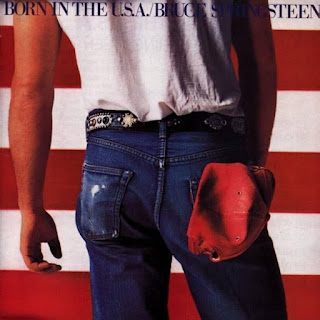
A lot of Boss fans believe this image
is symbolic of Bruce taking a piss - look at how he's standing -
on the American flag, a direct rebuke of the
rah-rah patriotism that Bruce saw during Vietnam
and the Reagan years.

Controversy aside, this album is one of Bruce's major works, an effective mix of moody ballads, odes to nostalgia, and straight up rockers. If you ignore the hype and actually listen to the lyrics, that is.

Epic Song(s): Born In the USA, Downbound Train, No Surrender, Glory Days
Great Song(s): Darlington County, I'm On Fire, Bobby Jean, My Hometown
Good Song(s): I'm Going Down, Dancing In the Dark


Title: Tunnel of Love (1987)

Importance: Coming off of the media high of the Born In the USA period, and also coping with the complexity of his own personal life going through the wringer, this album defied the expectations the media had of Bruce sticking to the manufactured flag-waving that had made him an 80s superstar.

Having wed an actress/model Julianne Phillips in 1985 - almost under societal pressure to do so - that marriage quickly soured, which reflected on this album's entire theme of the highs and lows of relationships.

Technically not an E Street album, as the band members only appeared in several songs throughout, but also not a straight solo album like Nebraska, this work seems to take a middle approach. Even with the backing band helping the music be more radio-friendly, this becomes arguably Springsteen's most personal album speaking from his own soul about the turmoil he needed to resolve.

In my opinion, this may be Springsteen's greatest work. The lyrics are at the level of sheer poetry, the music matching the mood on nearly every song, and the entire album fitting its themes about love and loss in ways few other albums by other artists ever achieved (Fleetwood Mac's Rumours arguably the only work to exceed this one). "Brilliant Disguise," an incredible gut-wrencher of a song about the pain of falling out with someone you thought you knew, is in my humble opinion the greatest song Bruce ever wrote.  

Epic Song(s): Tougher Than The Rest, Spare Parts, Tunnel of Love, Brilliant Disguise
Great Song(s): Ain't Got You, All That Heaven Will Allow, Two Faces, One Step Up, Valentine's Day
Good Song(s): Cautious Man, When You're Alone


Title: Human Touch (1992) 

Importance: With the 1980s in the rearview mirror, Springsteen made the decision to reinvent himself as a different kind of rocker. He made the announcement that he would perform with a brand-new backing band (he didn't exactly say outright that the E Street Band was finished, but yeah) and set to work on two albums to be released simultaneously (there was a brief fad by artists like Guns n Roses to release two separate single LPs instead of releasing a double album, as though giving fans a choice to buy one or the other).

The resultant releases - at least here with Human Touch, not as much with Lucky Town - was a more pop-oriented sound than even Born in the USA. It was as though Bruce decided "Okay, let's make an album for an arena rock tour." However...

Both these albums had the misfortune of coming out just as Nirvana and the Grunge movement reset the rock music scene in the opposite direction Bruce was heading. The pop mentality underscoring Bruce's work on this album failed to appeal to general audiences, and worse alienated die-hard Springsteen fans more attuned to a rawer, bar-band sound. Some of the songs on this album have held up over the years, such as the title track, "Roll of the Dice," and "Real World," but others like "57 Channels" - Bruce's hoped-for pop hit that preached in all the wrong ways - were painful mistakes. The other album release at least walked away with a slightly better reputation.

Epic Song(s): Human Touch, Roll of the Dice
Great Song(s): Gloria's Way, Real World
Good Song(s): Soul Driver, All Or Nothing At All


Title: Lucky Town (1992)

Importance: Released in sync with Human Touch, Lucky Town had the impression of being the more blues-oriented sound of the two. Where Human Touch focused on more pop-flavored tunes, this album appealed to the sounds Springsteen relied on in his earlier albums. Problems again were that the over-produced feel to the songs hurt some of the tunes that could have been better off with more rawness. Still, of the two, Lucky Town is more enjoyable work all these years later. Like the debates fans have about double albums over what could get pared down to a more pleasing single album, I would argue Bruce was better off taking the best songs here and the best songs on Human Touch and just releasing that as one (better) album.

Epic Song(s): Better Days, Big Muddy
Great Song(s): Lucky Town, Living Proof
Good Song(s): Local Hero, If I Should Fall Behind, My Beautiful Reward


Title: The Ghost of Tom Joad (1995)

Importance: Either reeling from the backlash of the previous albums' poor reception, or else getting into the groove of bouncing between band-backed studio albums followed by toned-down acoustic solo works, this album had Springsteen returning to his meditations on the decline of the American middle class and the cynicism of a political culture that punishes the poor.

Essentially the spiritual successor to Nebraska, but done with a more somber and slow take and with more country influence than folk, one of the problems with this album was how bleak it got compared to everything else Springsteen had done before. Not helping matters was a dip in the sound quality: Half of everything Bruce sang was whispered or muffled, making this a nearly incomprehensible work. Coming at a time when my other music faves U2 and Van Halen were releasing miscues of their own, this was an album I just couldn't get into and kind of soured me on music for the rest of the 1990s.

Re-listening to it now for this review, I can be more forgiving now than how I first received this album, but it's still more bleak than what I like to hear. Makes me wonder what an "electric" version of this album would sound like.

Epic Song(s): Ghost of Tom Joad
Great Song(s): Straight Time
Good Song(s): Youngstown, The New Timer, Galveston Bay, My Best Was Never Good Enough


Title: The Rising (2002)

Importance: The release date matters. THIS was the album Bruce released in the wake of 9/11. 

Responding to the emotional trauma of the entire nation, Springsteen crafted songs and odes to those who had fallen that day and for the families they had left behind. Echoing the beliefs he's shown about American life throughout his early period - much like Darkness but without the bitterness - this was Bruce's - and the reunited E Street Band's - return to form.

Anchored by the title track "The Rising," which was less an anthem - not at all like "Born in the USA" - but more a hymnal, a religious memorial to those who died on 9/11. The closing chorus of Bruce describing the images of family and loved ones while another voice echoes "A Dream of Life" is the most haunting thing I've ever heard, and automatically triggers a crying fit even thinking about those lines. Excuse me (wipes the tears away). It's a song you need to sing (not listen, you will feel yourself driven to sing along) in cathedrals, and when performed live - trust me, I witnessed it first hand this February - it's a straight-up religious experience.

This wasn't an album written in anger. It was an attempt at coming to terms with the grief.

Epic Song(s): Lonesome Day, The Rising 
Great Song(s): Waiting on a Sunny Day, Further On Up the Road
Good Song(s): Counting on a Miracle, My City In Ruins


Title: Devils & Dust (2005) 

Importance: Following the pattern of an acoustic album after a band album, Springsteen culled together songs he'd been working on for a decade or more and issued this to critical acclaim. On this, he played more to the style of Dylan instead of Pete Seeger (which had been more noticeable influences on Nebraska and Tom Joad), which gives some of the songs more of a rock n roll edge than before. It's still in the purview of Darker and Edgier that makes this album hard to sit through in a good mood.

Epic Song(s): Devils & Dust, Long Time Comin
Great Song(s): All the Way Home, Maria's Bed
Good Song(s): Jesus Was an Only Son, The Hitter


Title: Magic (2007)

Importance: Getting back into the groove of reuniting with the E Street Band (AGAIN), Springsteen also got back into the habit of writing about the struggles of Middle America, this time with a bittersweet nostalgia as Bruce is clearly going through middle age. Both the quagmire of the Iraqi/Afghani wars - which had to trigger Bruce's memories of what Vietnam did to his friends - and the early onset of the Great Recession added to the underlying despair.

Among the darker elements of this album were several of Springsteen's brighter musical efforts, with "Girls In Their Summer Clothes" mirroring the romantic early works like "Rosalita", except with the melancholy of an older man wondering why those girls "passed me by." It was a song that deserved a little more radio love at the time, and it's arguably one of his later works that equals the best albums from his peak. 

The way I don't see much talk about this album, I get the feeling this was a very underrated effort and people need to reconsider its place in the Springsteen pantheon.

Epic Song(s): You'll Be Coming Down, Gypsy Biker, Girls In Their Summer Clothes
Great Song(s): Radio Nowhere, Livin' in the Future, Long Walk Home
Good Song(s): Last to Die, Terry's Song


Title: Working On a Dream (2009)

Importance: What Steven Van Zandt called the last of a trilogy of albums - starting with The Rising and seconded by Magic - covering the mood Springsteen had regarding the decade scarred by 9/11, bad wars, economic malaise, and questionable Star Wars prequels. Going in hard with a big rock-n-roll sound with the E Street backing him up, Springsteen attempted to create a grand musical experience on this work, only to have a lot of miscues and questionable decisions muck things up. This was the first album post-Born to Run I didn't fully like, and a recent re-listening for this review still didn't win me over. 

This was also the album that band member Dan Federici recorded on before passing in 2008. This is the point where time is catching up to the band, and the future albums were going to reflect that.

Epic Song(s): Lucky Day
Great Song(s): Working on a Dream, the Wrestler
Good Song(s): alas


Title: Wrecking Ball (2012)

Importance: Building up on the anger about the causes of the Great Recession that was still ongoing by this point, witnessing the passage of time affecting his New Jersey roots as well as coming to terms with more personal loss, this was the album Springsteen released to a new decade coping with the same old sorrows.

Not a full E Street effort but more rocking than his acoustic albums, this album shares more with Tunnel of Love in that regard, but it more closely resembles Magic in mood and effort. Anchored by the title track "Wrecking Ball" - an ode to the demolition of aging Meadowlands Stadium, where Springsteen played often on his tours - this is an album defined by defiance.

This is the album released after the death of "Big Man" Clarence Clemons himself (the album is dedicated to him). His power on the saxophone, a key element to the brass Jersey Bar sound that carries the band even after his passing, this was a loss that affected Bruce and the band in painful ways. 

Epic Song(s): Wrecking Ball
Great Song(s): Shackled and Drawn, Land of Hope and Dreams, We Are Alive
Good Song(s): Easy Money, You've Got It


Title: High Hopes (2014)

Importance: As part of the ongoing efforts by Springsteen to re-record, remix, and update many of the songs he's worked on since the 1970s - his backlog of unreleased material could fill a five-story library, and I might not even be exaggerating - Bruce often came out with releases like Tracks and The Promise to cover particular eras or productions like the Darkness sessions. This album was probably the first by my estimation where he added remixes of already-released songs performed in alternative ways as though rethinking his earlier decisions and looking for better acceptance.

As such, this is one of Bruce's more experimental albums, not artistic like Nebraska but exploring the range and feel of his existing music to see if he could find something fresh out of his older works. To my ears, not a lot of the songs worked out the way he hoped, but some of the choices - like turning "Ghost of Tom Joad" into a rock-n-roll number that would fit well into Magic and Wrecking Ball playlists - turned out as effective re-imagined efforts.

Epic Song(s): Just Like Fire Would 
Great Song(s): High Hopes, American Skin (41 Shots), Ghost of Tom Joad
Good Song(s): The Wall


Title: Western Stars (2019)

Importance: I tell no lie, I'm not a fan of country music. Southern rock, oft-times yes. And there are times in Springsteen's oeuvre where he crosses from Jersey Bar sound to Southern sound without missing a beat and going back again like he was merely visiting. When he goes acoustic most of his work echoes the folkways style of Seeger and Dylan, but some of those songs do carry a western flavor. This was the album where Bruce well full cowboy.

To be fair, Springsteen kept wanting to record albums that reflected the full American experience (like writing the Great American Novel) and so there had to be a lot of western-themed songs bouncing around in that head of his. Inspired by the California rock sounds of the 1970s like Glen Campbell and the Eagles - which carried a lot of country influence - Springsteen brought to it his own sense of nostalgia and bittersweet view of an America he missed from his youth.

For me, I dreaded getting this album worried it was going to be a sound I wasn't going to comprehend - much like watching U2 go disco on me with Pop - but this turned out to be a listenable effort, with decent songs that didn't sound any different from songs I've heard between Darkness through Wrecking Ball. At least Bruce got this out of his system. I think.

Epic Song(s): Sundown, Hello Sunshine
Great Song(s): Tuscon Train, Sleepy Joe's Cafe
Good Song(s): Hitch Hikin' 


Title: Letter to You (2020)

Importance: Coming relatively quickly after Western Stars, as though Springsteen wanted to get back to his rock roots with the E Street Band as soon as possible, Letter to You came out just as the world shut down over a pandemic. It seems almost fitting, as a lot of the songs on this album seem affected by all the personal losses Bruce was feeling echoing the similar losses a lot of people were going through (not just the deaths of loved ones, but the reality our lives were changing in ways that can't be undone).

A lot of the lyrics on this album come across as Bruce's most personal work since Tunnel of Love, and is near-equal to that album in terms of poetic impact. Songs like "Last Man Standing" - dedicated to Bruce's friend George Theiss who co-founded his first band the Castiles - covered themes like aging, and regret of a man reaching 70 and coming to terms that he's closer to his death - "coming for me like a freight train" - than to his birth.

Musically this is one of Springsteen's most melodic efforts, and arguably the best album he's done since the 1980s, placing this atop the great albums - Born to Run, Darkness, and Tunnel of Love - on his resume.

Epic Song(s): Letter to You, Last Man Standing, House of a Thousand Guitars, Ghosts 
Great Song(s): Burnin' Train, I'll See You In My Dreams
Good Song(s): Rainmaker 


Title: Working On a Dream (2022)

Importance: Interesting for a musician/songwriter like Springsteen, he's got so much of his own material to record you don't expect him to do a lot of covers of songs written/performed by others (Hell, he's given half the music industry his outtakes between 1977 through 1987). So it was a shock to witness Bruce release an album of nothing but covers. This is, by his own account, an attempt to "just sing" and perform the songs he felt did justice to the "great American songbook."

Focusing on R&B and soul songs from the 1960s through the 1980s, Bruce does his best to sing in that style, and on some of these songs he acquits himself well. It's just... well, I'm sorry, not every song deserved a cover version (the originals being way better no matter what Bruce tries to do). To me, the most egregious is his take on "Nightshift," a memorial song originally sung by the Commodores dedicated to Jackie Wilson and Marvin Gaye: where the Commodores was soulful as befitting an R&B group, Springsteen's attempt just sounded... wrong, overproduced, not at the right tempo. More of a rocker than an elegy. Bruce may love that song, but... I'm sorry, it was perfect the way it was.

This album does help us as a fanbase to see what influences Bruce when it comes to his own work. And some of the performances are good. It's just... was this trip really necessary?

Epic Song(s): Don't Play That Song
Great Song(s): Do I Love You (Yes I Do), Turn Back the Hands of Time, Any Other Way
Good Song(s): Soul Days, I Wish It Would Rain 


And that, kiddos, is the official studio albums he's done. Wanna go into some of the albums and packaged releases of importance to the Springsteen catalog? 'Cause there's MORE (oh Gods).

Maybe for the next tour. 

Thursday, February 02, 2023

I Survived a Bruce Springsteen Concert

Good Lord.

The Boss never took a fucking break.

I was just standing there for most of the concert and *I* was the one who ended up with a leg cramp. Or was that a pulled muscle? Either way, I was fatigued.

I went deaf in my left ear. I woke up this morning with it still ringing. Anybody got a cure for that?

It was a goddamn religious experience.

It was the opening night of the E Street Band's tour, starting in my backyard of TAMPA FLORIDA HOME OF THE TOM BRADY LED BUCCANEERS, FIRE THEM CANNONS (oh God, time for another rebuild /cries).

So, in the interests of preserving history for future generations, I documented much of the night.

Outside the hockey arena (TAMPA IS A HOCKEY TOWN DAMMIT)
with my SIL Karen. She's not A Karen, she's sweet and polite
and never demands to see a manager.

This was the crowd getting in to the show. 
Traffic actually more backed up than I-4!

Brother Phil with Karen, in line at the security check-in

I'm usually not a fan of orange, but of the tour t-shirts for sale
this had IMHO the best look, the best style.
I need to wear Friday at work to prove I was here.

Settling in for the show

HOLY SHEET, IT'S SPRINGSTEEN.
BRRRRUUUUUUUUCCCCCEEE.


A cleaner picture of this would work
as cover art for a live album.
...Is it just me, or should EVERY Bruce Springsteen concert
be released as a live album...?


Do they make smartphones with better than 4x zoom?!
Asking for a friend who'll wear earmuffs to the next concert.

During the encore part of the concert.
Actually, there was no encore, the E Street Band just kept playing.
Like I said earlier, there were no breaks. The only time the band left the stage
was when Bruce did his only solo performance of the night with
"Last Man Standing."

Hell, I need to share you the playlist for the Tampa show. Not as many songs from Bruce's latest albums - Western Stars, Letter to You, Only the Strong Survive - but a lot of early years stuff, especially from Darkness On the Edge of Town, which is a personal favorite of mine. (EDIT: A quick review of the songlist revealed Letter to You album DID get prominent play, my bad. I need to go re-listen to that CD). When Max starting off the opening cymbal riff for "Candy's Room," I squeed and hopped up and down. Maybe that's where I got the pulled muscle/cramp.

SET LIST

21 SONGS

1 NO SURRENDER

2 GHOSTS

3 PROVE IT ALL NIGHT

4 LETTER TO YOU

5 THE PROMISED LAND

6 OUT IN THE STREET

7 CANDY’S ROOM

8 KITTY’S BACK

9 BRILLIANT DISGUISE

10 NIGHTSHIFT

11 DON’T PLAY THAT SONG

12 THE E STREET SHUFFLE

13 JOHNNY 99

14 LAST MAN STANDING

15 HOUSE OF A THOUSAND GUITARS

16 BACKSTREETS

17 BECAUSE THE NIGHT

18 SHE’S THE ONE

19 WRECKING BALL

20 THE RISING

21 BADLANDS

ENCORE

7 SONGS

1 BURNIN’ TRAIN

2 BORN TO RUN

3 ROSALITA (COME OUT TONIGHT)

4 GLORY DAYS

5 DANCING IN THE DARK

6 TENTH AVENUE FREEZE-OUT

7 I’LL SEE YOU IN MY DREAMS


I am now moved to write up a HARK! review of Springsteen albums later this month. Once my ears stop ringing.

...Seriously, that performance should be released as a live album. It'll give me a chance to lower the volume on the headphones when I re-listen to AAAAH NOPE STILL TOO LOUD ACH MY EARS...

Update: I uploaded a video from the opening moments of the concert, when the band emerged to play "No Surrender." And... well... I am not happy with the video quality. :( I need a smartphone with a better zoom and camera. Sigh. Anyway, ONE TWO THREE FOUR:


Tuesday, August 16, 2022

Remembering Woodstock '69 in 2022

We're starting to get further away from the original festival of music and arts (and hope), but we need to remind ourselves our nation - the kids, the cops, the bands, the citizenry of Bethel - did okay in a confusing chaotic weekend.

I may go visit the museum in Bethel when I find the time, maybe plan ahead for next year.

In the meantime, some Youtube clips I've scavenged: 


WHAT'S THAT SPELL?

I met a girl who sang the blues/
And I asked her for some happy news/
But she just smiled and turned away...


And as always, a big thank you to Mr. Taggart, Hero of Woodstock Nation.


Monday, July 04, 2022

Four For the Fourth: Closing Arguments

Reminder: here are links to my other Four For the Fourth blog articles, one about a plea for silent firecrackers, one about women's rights to independence, and one about the need for fixing our nation to save our freedoms!

When you don't go to the parties or to the firework shows for a 4th of July, you end up at home switching between the movie marathons on cable or watching the 4th of July specials on PBS or NBC.

Only I can't watch the 4th Specials for too long on the networks. I just can't. 

Because there's too much Country music playing.

I'm sorry. I never got into Country. I grew up in the suburbs of Virginia Beach and later Tampa Bay. I'm a Boy from the Harb. I grew up to Led Zep and Van Halen and every arena hard rock band between 1979 through 1991. I miss the Dunedin Record & Tape Outlet store, it's where I got into L.A. punk and British Sixties blues.

Country to me has too much twang, too much proud ignorance, not enough poetry or wit IMHO when it comes to the lyrics. There are few Country songs I can abide, there's practically only one song - this one from Dierks Bentley - because at least it's got self-deprecating humor to it:


I admit if my parents stayed in Albany GA or we moved to a part of Florida that was out in the boonies, I might have grown up different. But nope, I'm a suburban mallrat, I grew up to heavy drums and loud lyrics and screeching guitar licks and that's what I want to hear for my 4th of July goddammit.

Where's the "Stars And Stripes Forever" march played by Metallica, you fiends.


LET'S MAKE SOUSA A METALHEAD NEXT 4th!!!

Sunday, September 19, 2021

Hark! A Ranking of Nirvana Albums (w/ Update)

Nothing ages a Generation Xer faster than the realization we've grown into Baby Boomer levels of nostalgic anniversary awareness.

For example, waking up the last couple of months to realize that two of the albums that truly defined our generation - Pearl Jam's Ten and Nirvana's Nevermind - have reached their 30th year anniversaries.

(Suddenly, all the hair turns white or falls off) (A wheelchair appears and knocks the Gen Xer into the seat) (one of those giant megaphone cones that people used before the invention of hearing aids shows up as a prop in one hand) "What's that sonny? 'Smells Like Teen Spirit' is on the radio? TURN IT UP! Not because I can't hear it mind you, actually yeah it's because I can't hear so good anymore..."

I kid. Most of us Xers are still able to hear things at high decibel output as well as operate heavy machinery, trust us.

Still, the reality that it's been thirty years since the great generational awakening - the moment in the early 90s when we (speaking as a White Boy) as a demographic moved into early adulthood and our own decision-making, away from the gaudy, glamor-filled, gleaming 80s - when our musical tastes moved into the more cynical and caustic Grunge movement (or the more cynical and caustic Gangster Rap movement with the rise/fall of NWA and their spinoffs Ice Cube/Dr. Dre). Our tastes in cinema and television were also turning darker, but into their own elements that would require other deeper essays to express (you could glance at my take on the Matrix anniversary for an idea how our worldview affected movie-making even by 1999).

It seems funny that the spearhead of this shift were bands like Soundgarden and Mudhoney - well-regarded bands in their own right whose Seattle Sound was turning attention away from L.A. hair metal - but it was the "debuts" of bands like Pearl Jam and Nirvana that launched Grunge into the upper atmosphere to turn a status-quo music industry on its head. And while Pearl Jam's Ten is considered a masterpiece in its own right, we still look to Nevermind as the cultural keystone, the one big thing that shattered standard operating procedures and sent a lot of record label studios across the planet looking for the next Nirvana to feed off the growing Grunge scene.

As for Nirvana the band itself, I had already written a few words about that when I wrote about their frontman Kurt Cobain. Lyricist, guitarist, singer (more like screamer on half the songs), Cobain was the essential man of the lineups. Alongside bassist Krist Novoselic, the two would go through a cycle of drummers - notably Melvins' drummer Dale Crover, and Chad Channing which whom they recorded their first album Bleach - before hooking up with Dave Grohl (who impressed the two when they saw him drum for another local band Scream). That was the lineup that ended up recording Nevermind... and entering music history forever.

I still can't fully explain to you the impact Nevermind had on the cultural landscape. It was like overnight the bright neon shininess of the 1980s was turned off and the half-lit moodiness of the 1990s dominated every media outlet. Lyrics about mental health, dysfunctional relationships, coping with an uncaring world started showing up even in pop songs.

But it wasn't all doom and gloom. A weird sense of whimsy was still on display, a kind of haphazard "well, we gotta live with this" mentality came through all the weirdness. 

Not to mention the sudden dominance of flannel shirts in the fashion stores.

And as I wrote, that whole moment... just seemed to last that moment. By 1994, Cobain had become jaded and cynical enough, burned out by the sudden celebrity status, and strung out by his bad drug habits, that he took his own life in April and sent whatever made up the Grunge movement into its own death spiral. In some respects, the hard rock scene never fully recovered (the musical landscape is now covered with pop divas and hip-hop).

The impact of Nirvana's brief moment upon the global stage can't be overlooked: Reflection and Respect must be paid. So into that, I bring you another ranking of albums by a band I follow, and so Hark upon this friends.

Given the shortness of Nirvana's actual existence and the few studio albums they released during Cobain's lifetime, there isn't a real way to rank one album greater than another. So I present this brief listing in chronological order.

Ranking Nirvana Albums

Epic to Epic

Title: Bleach

Reasons: Nirvana's first album in 1989 was an Indie release via a local (Seattle) label called SubPop, which had also been instrumental in 'finding' other Seattle bands like Soundgarden and Mudhoney that were key to the emerging Grunge scene. Recorded with drummer Chad Chadding (with previous drummer Dale Crover on several earlier recorded songs), Bleach's overall sound is one of distorted, fast-riff guitar noise over incredibly simplistic lyrics even by Cobain's usual standards (Kurt later admitted he wrote the lyrics in a rush right before studio time and was in an angry mood when he did). Pressured into conforming to what the early Grunge sound was like in the Seattle scene, the album was meant to be a shift away from Nirvana's original output. That attempt didn't work. Even in this full rookie effort, you can see the style Nirvana will get noticed for: Punk-earnest lyrics mixed with hard-rocking up-tempo beats and working with a distorted noisy grind that harmonized into its own. 

After the band got big (and after Cobain left us), the re-releases for Bleach included several other songs such as “Big Cheese” and “Downer” to fill out the history of Nirvana's rise from SubPop to everything

Epic Song(s): About a Girl, Negative Creep
Great Song(s): Blew, Love Buzz, Scoff, Swap Meet, Big Cheese
Good Song(s): Floyd the Barber, School, Downer

Title: Nevermind

Reasons: I catch myself using the phrase “blew the doors off everything” when describing certain albums, like the Beatles Please Please Me (and Rubber Soul, and Revolver, and Abbey Road, and...), or U2's Joshua Tree, or Van Halen's self-titled debut. But that's because those albums DID hit the world like a storm, with an impact that other artists couldn't ignore and with a sound or voice we've never heard before.

Nevermind was such an album. For the entire music industry, this was a Before/After break in their history.

Starting with recordings with SubPop on their next album, Nirvana shifted gears when Chadding left forcing Cobain and Novoselic to find another drummer, which ended up with Dave Grohl when his band Scream had recently broken up. With Grohl in place, Nirvana then shopped for a new studio when SubPop was facing financial difficulties, ending with the DGC label under Geffen Records. With that settled, they got the album completed by June for release a few months later. Unhappy with the initial recordings, the band and producer Bruce Vig brought in more professional help to smooth out the takes, which ended up making the album sound much like the current “hair metal” bands of the 1980s. Ironically, this may have helped the album reach more audiences.

Nevermind arrived on the scene in late 1991 at a moment when reforms in album sales tracking – which had been over-promoting pop sounds like Madonna and Michael Jackson at the expense of little-heralded rock bands that people did listen to – opened up the chances a lesser-known band could see better sales numbers to encourage more radio play, meaning more listeners to notice them creating a nice cycle of positive reinforcement. Combine this to a shift in what audiences – Gen X – wanted to hear towards college/alternative style sounds (why yes, we WERE in college or heading there at the time), and that all turned this album from a minor introduction into a global phenomenon. Sales overwhelmed the expected best-sellers for that year, and carried over in 1992 as the Grunge movement crossed over to other similar bands with their own seminal releases. What was expected to sell about 200,000 copies ended up selling 1,000,000 (Platinum level), and then 2x Platinum, and then... well, by then everyone heard “Smells Like Teen Spirit.”

As mentioned before, Nevermind brought with it a punk mentality in the lyrics with a more up-tempo yet melodic sound. Influenced from Ramones to the Pixies to R.E.M. (the Alpha and Omega of College Sound), the emphasis was less on the distorted guitar noise (you can still hear it on “Breed,” “Lithium,” and “Endless Nameless”) and more on basic guitar chords that could shift from stanza to stanza. Cobain's anger in most of the song lyrics seemed more inward, cynical and self-deprecating, but offered with a grin as though no harm done (If we only knew...). 

As far as great albums go, Nevermind is still an uneven work where some songs fall flat where others shock you with how high they can rise: not fully polished like Joshua Tree or Revolver or any of the other respected masterpieces, but arguably more impactful with the songs that do reach you hitting you years after you've heard them. For a generation, what Cobain expressed in this album reflected a lot of the anger, cynicism, despair, and hope we had for ourselves.

Epic Song(s): Smells Like Teen Spirit, Come As You Are, Lithium, On a Plain
Great Song(s): In Bloom, Breed, Polly, Drain You, Something In the Way
Good Song(s): Territorial Pissings, Lounge Act, Stay Away

Title: Incesticide

Reasons: When Nevermind turned into a behemoth, the record studio DGC/Geffen reached out to grab anything Nirvana that they could repackage to sell while the Grunge going was great. This meant regional EP (extended play mini-albums) released overseas, Indie singles, and unreleased demos and cover songs saved to tape somewhere. The result was this, a compilation album of every leftover that could get repackaged as Filet Mignon. 

As a result, it's not the best-sounding album released while Cobain was alive, but it does provide context and understanding of how his lyrical style developed and how the band's overall sound evolved. This is arguably the hardest album to listen to, not because of any lyrical dissonance – this is Nirvana/Cobain, it's ALL lyrical dissonance! – but because a lot of these songs were not released earlier for a reason (okay, Kurt, you like feedback, we get it...).

Epic Song(s): Aneurysm
Great Song(s): Sliver, Son of a Gun, Aero Zeppelin
Good Song(s): Dive, Stain, Been a Son, Hairspray Queen

Title: In Utero

Reasons: The follow-up to a breakthrough album, Cobain and his bandmates were caught in a moment where expectations were greater than they'd ever known. Pressured to release an album to sell to the masses yet trying to stick to their own artistic bents, Cobain in particular wanted to push back against those expectations to make an album he'd respect. In some ways, the sound self-sabotaged by going back to the earlier distorted noise prevalent in Bleach: A rawness to the chords, an uneven rhythm to the backbeat, more of Cobain screaming into the void. The lyrics and attitude matched the noise: Songs like “Radio Friendly Unit Shifter” (an obvious punch-back at how the music industry was over-hyping the band and the Grunge scene) were anything but friendly for radio play.

Even with that, In Utero impressed the fanbase and sold well, extending the band's fame. In spite of the distortion, traces of melody still got through. The simple direct wording of Cobain's lyrics still expressed complexity of emotions. Fans got “All Apologies” and “Dumb” and understood where the self-deprecation was coming from. This isn't as fun to listen to as its predecessor, but it's just as self-reflective, and in some regards more haunting because of what came after. 

Epic Song(s): Heart-Shaped Box, Rape Me, Dumb, All Apologies
Great Song(s): Frances Farmer Will Have Her Revenge on Seattle, Very Ape, Pennyroyal Tea
Good Song(s): Serve the Servants, Milk It, Radio Friendly Unit Shifter

Title: Unplugged in New York

Reasons: Added to this list as one of Nirvana's final recordings, done when the band performed for MTV's popular “Unplugged” series of acoustic performances by artists of the day in November 1993. With Cobain's death in April 1994, this concert became one of the last that we knew Cobain had done, and so an album was crafted from the broadcast and offered as the swan song to Nirvana as a band (the two surviving members Novoselic and Grohl wisely broke up, knowing any attempt to continue would be demeaning of Cobain's memory). 

Anyone listening to this album will likely know this backstory, and likely will listen with an ear to seek out clues to every haunting, haunted song performed here. There is still a beauty to this work: Away from the loudness that the studio albums and normal live shows go for, this album is more low-key, focused on the melody, played at a more reflective, introspective pace (It still has distortion because Cobain could not go full acoustic and had brought an effect pedal as a “security blanket”). Covering all parts of Nirvana's brief history, with soul-stirring versions of “About a Girl” all the way up to an orchestral-like “All Apologies,” and intermixed with cover tunes - mostly from the band The Meat Puppets, some of whom were backing instruments on this concert - that the band enjoyed playing, the Unplugged album remains with us like a ghost, reminding us of the musical potential the band had, especially Kurt... 

Epic Song(s): About a Girl, Come As You Are, The Man Who Sold the World (Bowie cover, and oh was Bowie pissed afterward because clueless Nirvana fans kept thinking he had covered them), Dumb, Polly, Plateau (Meat Puppets cover), Lake of Fire (Meat Puppets cover), All Apologies
Great Song(s): Oh Me (Meat Puppets cover)
Good Song(s): Where Did You Sleep Last Night (Lead Belly cover)

And... that was it, everyone. Nirvana in a brief moment of our lives.

“Fuck you all, this is the last song of the evening.”
- Cobain before singing Lead Belly's “Where Did You Sleep Last Night” on Unplugged.

Update 7/20/22: This was one of the five articles submitted to this 2022 Florida Writers' Association's Royal Palm Literary Awards, and good news it's passed the Semifinalist stage to try for the Finalist judging next. Nice new logo from FWA to go along with the news... 


Update 8/12/22: I am happy to report this article survived the Finalist round! Now, from what I learned the first time I reached this spot, this does not guarantee a top three finish. There can be 5 other blog articles that reached this level, there could be 10 or 20. But there is still a good chance this could win first, second, or third prize in the Nonfiction - Blog category. So now I have to show up at the banquet... Also I get this FWA Finalist logo.